
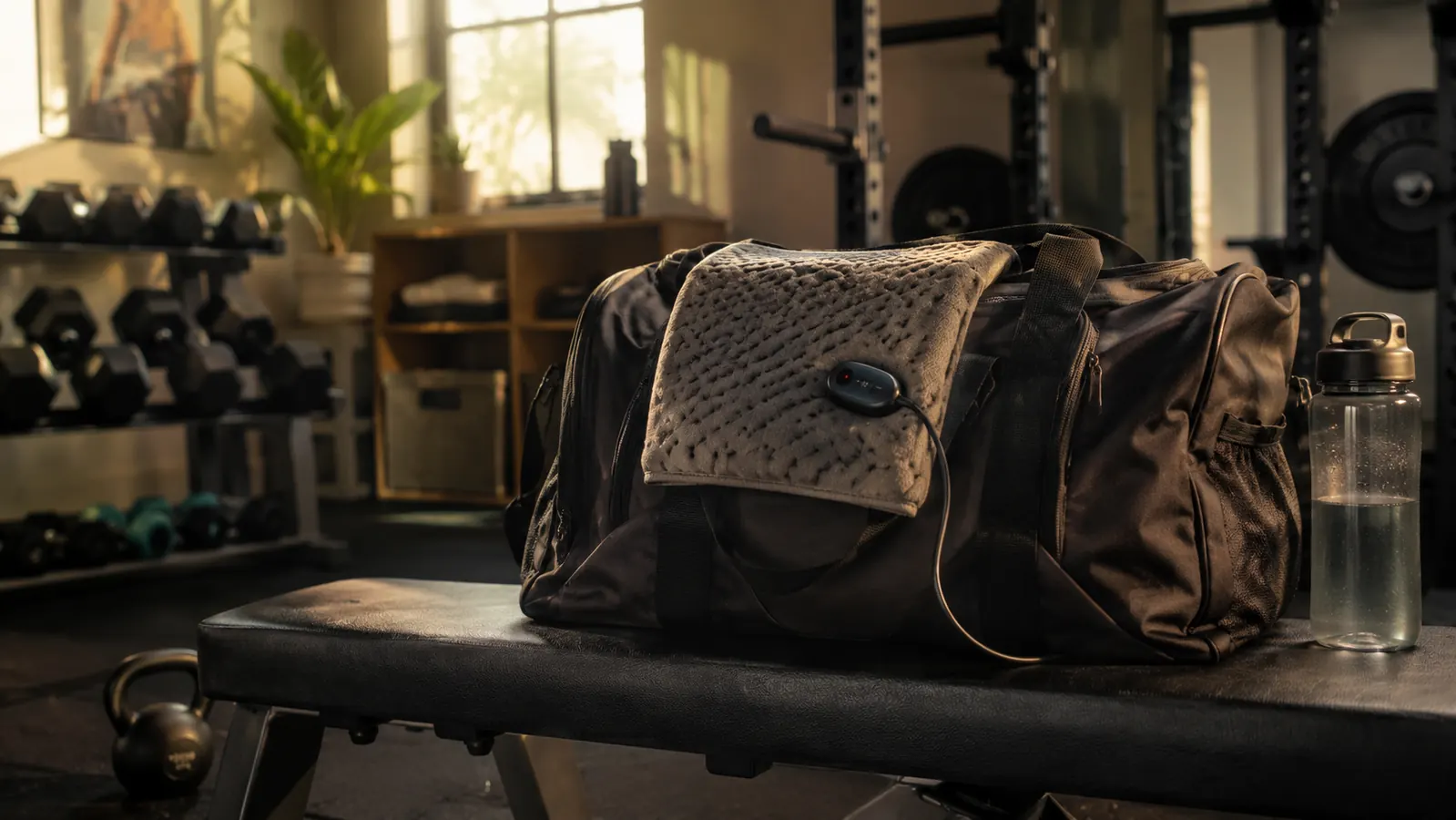
Here is what the Deepsoon Heating Pad product page does not tell you: the auto-shutoff timer cuts power at 90 minutes, every single time, on every setting. It does not matter whether you started at setting 6 and planned to sleep with it. It does not matter whether you forgot it was on. Ninety minutes and the pad goes cold. For some people, that is a safety feature. For people managing chronic lumbar tightness after training, it is the thing they find out about at 11:30pm when the heat disappears mid-session.
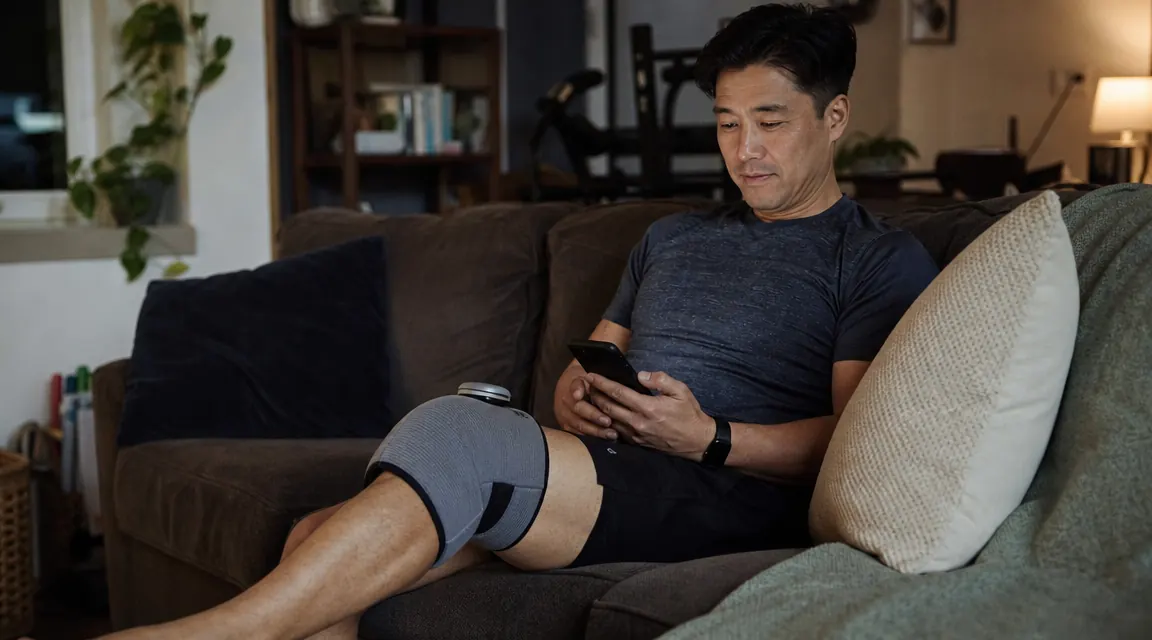
I have used this pad on my lower back, my right knee, and my neck over roughly three months. I am a strength coach, not a radiologist, but I have spent enough time thinking about tissue temperature, post-workout vasodilation, and chronic vs acute injury to give you an honest read on what this budget heating pad actually does well, where the marketing language gets squirrelly, and the three situations where you genuinely should not reach for it at all.
The Quick Verdict
Solid entry-level heat pad that earns its 4.4 stars , but the auto-shutoff, short cord, and limited moist-heat penetration are real constraints the listing downplays.
Amazon Check Today's Price →Already convinced it fits your situation? Check today's price before you read on.
The Deepsoon runs at a budget price at most times. If you need a basic, washable, six-setting electric pad for post-workout muscle recovery, it is hard to argue with the value at this price point.
Amazon Check Today's Price on Amazon →How I Have Been Using It (And Why This Review Is Different From the Long-Term Write-Up)
The long-term use review on this site covers five months of daily post-training application on a chronic lumbar situation. This review is deliberately not that. My focus here is on the specific product claims that get fuzzy when you put the pad through real use: what the six-setting temperature range actually feels like against your skin, how the cord length interacts with actual positions you need to be in, what 'moist heat' means when there is a 1.5-inch sponge insert involved, and where the line is between 'muscle tightness this can help' versus 'something you need a physio to look at.'
I spent three months using this on my lower back (hip hinge fatigue and chronic L4-L5 tightness that has been with me since 2019), my right knee (patellar tendon aggravation from heavy Bulgarian splits), and my neck/upper trap after overhead pressing days. I ran it with and without the moist-heat sponge insert. I timed the auto-shutoff on three different sessions to confirm the 90-minute cutoff. I measured the cord. These are not things a casual reviewer bothers to check, but they are the things that determine whether this product actually fits your life.
The Auto-Shutoff: Safety Feature or Scheduling Problem?
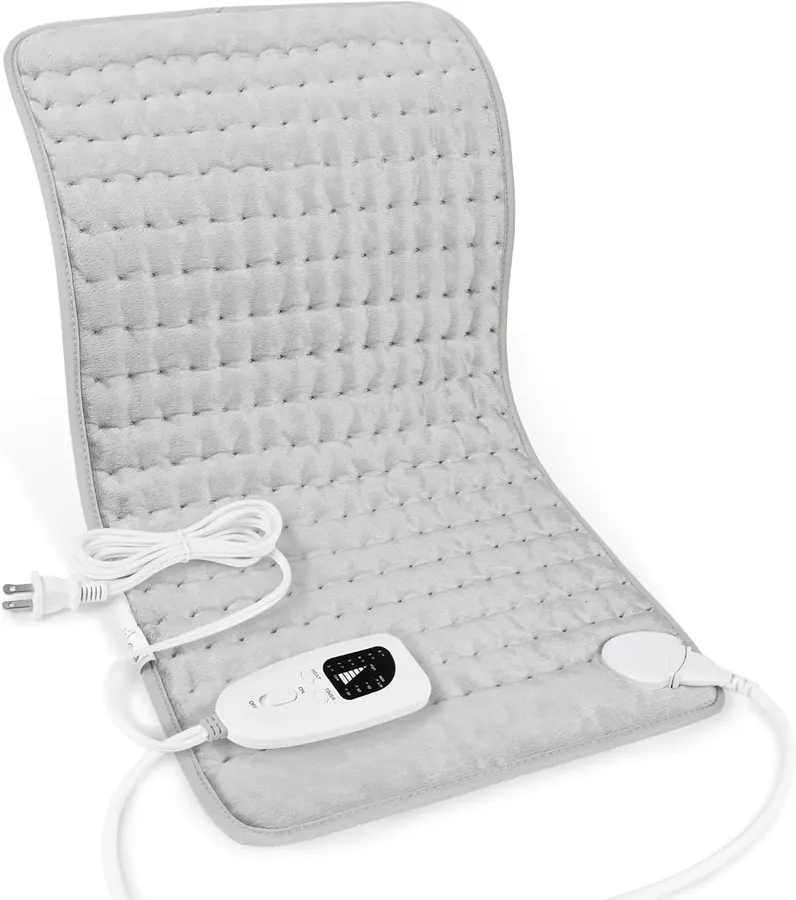
The Deepsoon listing mentions an auto-shutoff as a safety feature. What it does not specify is the trigger time. The answer is 90 minutes, and it applies regardless of setting. Setting 1 (lowest), setting 6 (highest), or anything in between: the pad powers down at the 90-minute mark automatically. This is standard in the budget heating pad category and is not a defect. But it is a constraint the marketing does not communicate clearly.
For most post-workout applications, 90 minutes is more than enough. Sports-medicine literature on heat therapy for muscle recovery generally recommends 15-20 minutes of application per session, up to two sessions per day. You are unlikely to hit the 90-minute cutoff in a normal recovery context. Where it matters is extended passive use: people who use a heating pad while watching TV or before sleep, or people managing chronic tightness who prefer long, low-intensity heat sessions rather than short high-heat pulses. If that is you, you will need to manually restart the pad every 90 minutes, which defeats the 'just set it and forget it' expectation most buyers have at this price point.
The workaround is simple: set a timer on your phone to restart the pad if you want sessions longer than 90 minutes. But the honest answer is that no other pad in this price tier does this differently, so I am not penalizing the Deepsoon specifically. I am flagging it because three separate Amazon reviews I read expressed genuine surprise at the behavior, which means the product page is not doing a good job of setting expectations.
Temperature Settings: What the Numbers Actually Mean
The Deepsoon has six temperature settings. The listing implies a temperature range without giving you specific degree values for each setting, which is a common omission in this category. Here is what I can tell you from use: setting 3 is comfortably warm for most adults, setting 4 is where you start to feel real therapeutic heat, and settings 5 and 6 are hot enough that you should not leave them against thin skin or fall asleep on them without a layer of fabric between the pad and your body.
The important nuance here is perceived heat versus tissue temperature. The pad can reach surface temperatures that feel quite hot, but actual intramuscular temperature change at therapeutic depth (roughly 1-3 cm) is modest. A study from the Journal of Athletic Training found that moist heat at standard heating-pad output raises muscle temperature approximately 3-4 degrees Celsius at 1 cm depth over 15 minutes. That is clinically meaningful for reducing muscle stiffness and increasing tissue extensibility. It is not meaningful for reaching deeper structures like spinal discs, hip joint capsules, or piriformis at depth. If you have been told by a physio that you need 'deep heat,' an electric pad at any price point is not providing it. Clinical-grade infrared or therapeutic ultrasound is a different category entirely.
For the Deepsoon specifically, I found setting 4 to be my standard for lower back work and setting 3 for neck and upper trap. Setting 6 felt aggressive against the lateral knee and I scaled back quickly. The controller is simple and responsive, and changing settings is intuitive. No complaints on the interface itself.
The pad does exactly what a good entry-level heating pad should do. The issue is not what it does. It is what the listing implies it does that it cannot.
Cord Length and Placement Reality
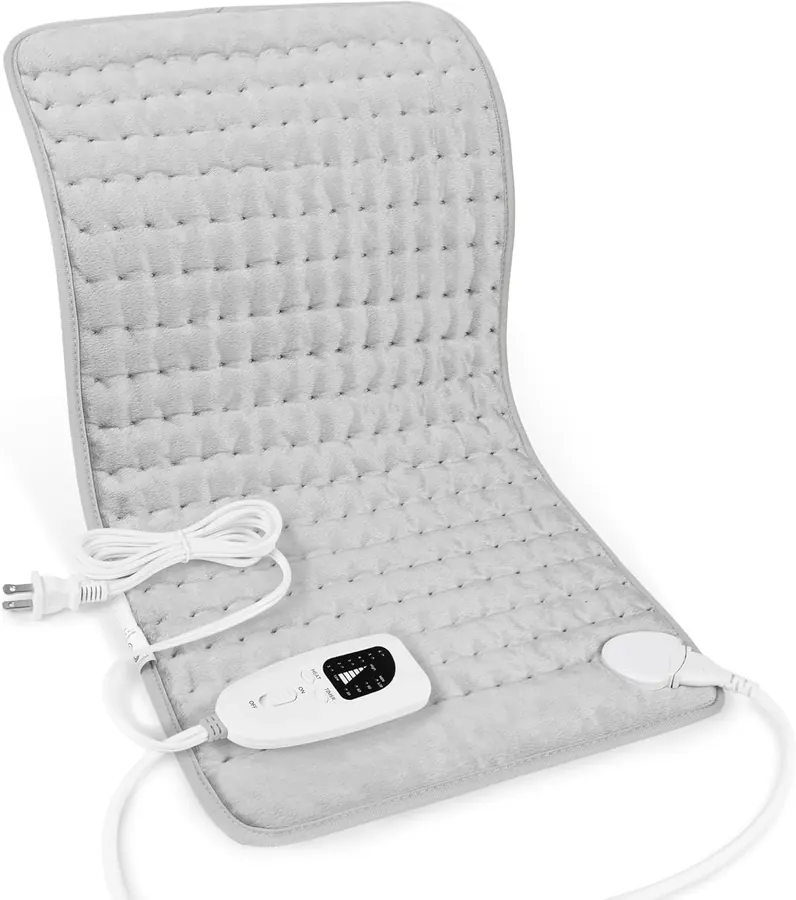
The Deepsoon's cord is 5.5 feet long, measured from the pad to the plug. That is a common cord length in this category, and it is adequate if your outlet is within reach of where you sit or lie. It is not adequate if you use a heating pad on a mat on the floor, if your bedroom outlets are behind furniture, or if you prefer using heat while seated in a chair positioned away from the wall.
I ran into this problem specifically with floor work. I do 15-20 minutes of mobility work post-lift on a floor mat, and I wanted to combine lower back heat with some hip flexor stretching. With a 5.5-foot cord and a standard outlet height of 12-18 inches from the floor, you are managing a cord that wants to pull the pad off your back every time you shift position. It is a minor annoyance, but it is the kind of thing that makes you reach for the pad less over time because setup feels fiddly.
The practical fix is a short extension cord or a power strip positioned near your typical use spot. A 3-foot extension gets you to a comfortable slack length. I should not have to recommend an add-on purchase for a budget product, but this is the reality of budget heat therapy equipment. Higher-end pads like the Pure Enrichment PureRelief have 6.5-foot cords and some have 9-foot cords. If cord management is a priority for your typical use position, it is worth factoring into your comparison.
Moist Heat Mode: What That Sponge Insert Actually Does
The Deepsoon includes a small sponge insert that slides into a pocket on the underside of the pad. The idea is moist heat therapy: you dampen the sponge, insert it, and the heat from the pad warms the moisture to create steam that penetrates deeper than dry heat alone. This is a real clinical concept. Moist heat does penetrate tissue slightly more effectively than dry heat at equivalent surface temperatures, and many occupational therapists prefer moist-heat hydrocollator packs over dry electric pads for this reason.
Here is the honest assessment of how this works on the Deepsoon: the sponge is small, roughly 3 inches by 2 inches, and the steam output is modest. You will feel a slight increase in skin humidity and a sense of deeper warmth compared to dry-pad use, particularly on the first 10 minutes before the sponge dries out. The effect is real but subtle. It is not the same as a clinical hydrocollator pack soaked in 160-degree water. Think of it as 'a little more moist than dry' rather than 'actual steam therapy.'
To keep the effect going for a 20-minute session, you need to re-wet the sponge partway through, which means removing the pad, pulling the sponge out, wetting it in the sink, reinserting it, and putting the pad back in position. Most people stop doing this after two sessions. The realistic outcome for most users is that they try the moist mode twice, find the dry mode 90% as effective with 0% of the hassle, and stop using the sponge. If moist heat is specifically recommended by your physio, a microwavable gel pack or a wet towel between you and a dry pad accomplishes the same outcome without the insert ritual.
What I Liked
- Six settings give genuine flexibility across different muscle groups and tolerance levels
- Soft plush surface is comfortable against bare skin on mid-range settings
- Washable cover maintains hygiene over months of post-workout use
- Auto-shutoff is a meaningful safety feature for anyone who falls asleep with heat applied
- Pad size (12" x 24") covers the entire lumbar region without adjustment
- Price point makes it accessible as a first heat therapy tool for new gym-goers
Where It Falls Short
- Auto-shutoff at 90 minutes with no option to extend without manual restart
- 5.5-foot cord limits placement options for floor work and furniture-adjacent outlets
- Moist heat sponge dries out within 10-12 minutes and requires mid-session re-wetting to maintain effect
- No temperature readout in degrees , settings are numbered 1-6 with no calibration guide
- Fabric shows wear after 20-plus machine wash cycles at the controller attachment seam
- Not suitable for acute injury, suspected joint pathology, or neuropathic skin conditions
What This Pad Cannot Fix (And When You Should Not Be Using It)
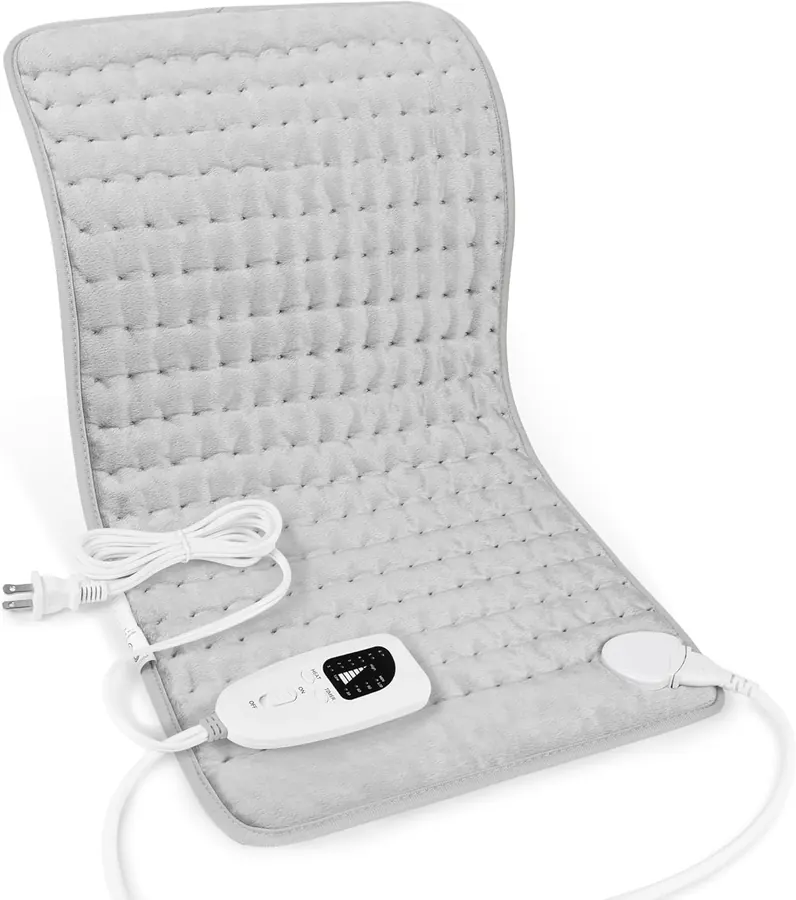
This is the section most reviews skip, and it is the most important one for anyone using heat as part of a recovery or injury-management protocol. The Deepsoon is a general-use electric heating pad. It is not a medical device. There are four specific situations where you should not be reaching for it at all.
First: acute injury. If you tweaked something in the last 24-48 hours, including a strain, sprain, or contusion, heat is contraindicated. The inflammatory phase following an acute injury involves increased blood flow and tissue permeability already. Adding heat accelerates that process, which increases swelling and can delay the return to training. Ice or compression is correct for acute injury management. Heat is a chronic phase tool.
Second: structural issues. Lower back pain that originates from a herniated disc, spinal stenosis, or facet joint pathology is not muscle tightness. Heat may provide temporary symptomatic relief by reducing muscle guarding around the painful area, but it does not address the underlying structural problem. If your back pain comes with numbness, radiating pain down the leg, or pain that worsens with specific movements like forward flexion, you are managing a spinal issue that needs clinical evaluation. A heating pad will not resolve it and may delay you from getting the appropriate care.
Third: neuropathy or reduced skin sensation. If you have diabetes, peripheral neuropathy, or any condition that reduces your ability to feel heat accurately, you should not use an electric heating pad without physician clearance. The pad can cause burns without you feeling the warning signals that would cause most people to remove it.
Fourth: open skin or recent surgical sites. The pad is not designed for use over wounds, incisions, or any area with compromised skin integrity. This is stated in the manual and worth repeating because people managing chronic conditions sometimes use heat habitually without thinking through whether the application site has changed.
Fabric and Durability After Washing
The Deepsoon's outer cover is machine washable, which is one of its genuine selling points for anyone using it after sweaty training sessions. The soft plush fabric holds up well through the first 10-15 washes. After that, you start to see pilling at the edges and at the seam where the cord attaches to the pad body. The pilling does not affect function, but it does affect the aesthetic, and after 20 or more washes the cover can feel rougher than it started.
The more significant durability question is the cord attachment. Budget heating pads in this category have a consistent failure point: the junction between the flexible cord and the rigid controller housing. This is a stress concentration point every time you coil the cord for storage. I have not had a failure in three months of use, but the Amazon review pool has a cluster of 2-star reviews specifically citing cord failure at this junction after 6-12 months. My standard recommendation is to coil the cord loosely rather than tight-wrapping it, and to store the pad flat rather than folded with the cord kinked. Small habits that extend the service life considerably.
Who This Is For
The Deepsoon is a good fit if you are managing post-workout muscle tightness in a specific area, you want a washable pad that covers a large muscle group (lumbar, upper trap, thighs), your use sessions fall in the 15-30 minute range, and you are working with a modest budget. At its price point, nothing else comes close for the combination of size, washability, and six-setting flexibility. If you are new to heat therapy and want to try it before committing to a premium pad, this is a reasonable starting point.
Who Should Skip It
Skip it if you need sessions longer than 90 minutes without interruption, if cord flexibility is critical to your typical use position, if you specifically need clinical-grade moist heat rather than the mild moisture effect from the sponge insert, or if you are managing anything other than general post-workout muscle tightness. Athletes with a specific diagnosis from a physio or sports-medicine doctor should use the tools their clinician recommends. A budget heating pad is a starting point, not a clinical intervention. The Deepsoon does what a good entry-level heating pad should do. The gap is between what it does and what the listing implies it does, and that gap is smaller than most budget products in this space. It earns its 4.4 stars. Just go in with accurate expectations.
If it fits your use case, current pricing makes this an easy call.
The Deepsoon Heating Pad is a solid, washable, six-setting electric pad for post-workout muscle recovery. Know the auto-shutoff, account for the cord length in your setup, and use the dry mode. If you can work within those constraints, it is genuinely good value at today's price.
Amazon Check Today's Price on Amazon →