

I coach strength training five days a week and I haven't missed a day of foam rolling in two years. Not because I love it. Because the one week I skipped it, my left hip flexor locked up mid-session and I spent two days limping. My client Marcus, 41, a desk-bound marketing director who lifts three times a week, had the same experience after his first 60-day streak. His words: 'I didn't notice it working until I stopped.' The TriggerPoint GRID 1.0 is the roller I've used every single morning at 5:45 AM and every evening after squat or deadlift days. Two years in, I have a very clear read on what it actually does, what the grid pattern contributes, and where cheaper rollers will serve you just as well.
The short version: this is a well-built tool that holds up to daily professional use, the multi-density surface does provide meaningfully different feedback than flat foam, and the hollow core matters more than most people realize. It's also a 13-inch cylinder that costs about twice what a plain EVA roller costs. Whether that trade-off is worth it depends entirely on what you're rolling, how often, and what you're trying to fix.
The Quick Verdict
A durable, thoughtfully designed roller that earns its premium over plain foam if you're rolling daily and working chronic problem areas. Skip it if you're rolling twice a week casually.
Amazon Check Today's Price →Still rolling on flat foam and wondering why your hips are still tight?
The TriggerPoint GRID 1.0 uses three surface densities to replicate a therapist's hand pressure. 31,000 verified buyers and a 4.7-star average on Amazon.
Amazon Check Today's Price on Amazon →How I've Used It
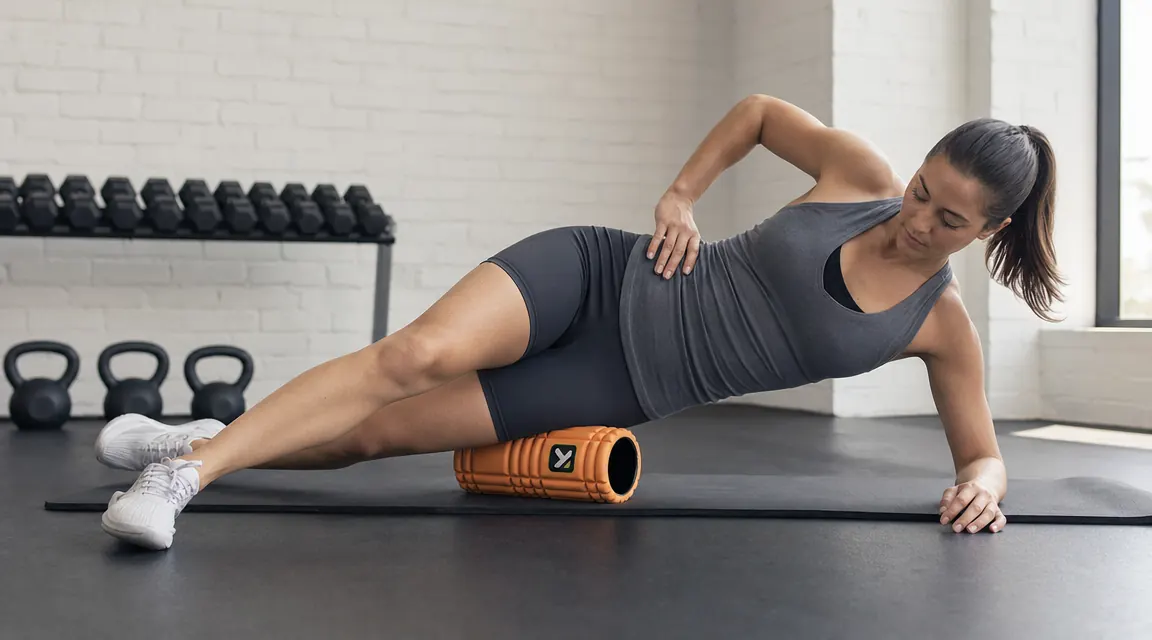
My protocol hasn't changed much in two years. Morning session is 10 minutes before I do anything else: 60-90 seconds per region, moving slowly (two to three inches per second, not the frantic back-and-forth you see most people do), pausing on tender spots for 5-10 seconds rather than rolling through them. I hit thoracic spine, hip flexors, glutes, and hamstrings in that order. Evening protocol after heavy lower-body days adds IT band and TFL work, which is where this roller earns its price.
Marcus follows a shorter version. He does 8 minutes each morning before sitting at his desk: thoracic spine for the upper-cross syndrome his desk posture creates, then hip flexors because sitting 9 hours a day shortens them relentlessly. He started with a flat EVA roller I recommended, switched to the GRID after two months when he needed more feedback on his thoracic work, and hasn't looked back. His morning stiffness score, which we track informally on a 1-10 scale, dropped from an average of 7 to around 3 within six weeks of the switch.
I've also used it with clients ranging from a 28-year-old trail runner to a 54-year-old masters powerlifter named Dave who has lumbar stenosis. The 13-inch length is the right call for most people. Long enough to work the full thoracic segment, short enough to control lateral hip work without the roller drifting.
What the GRID Pattern Actually Does
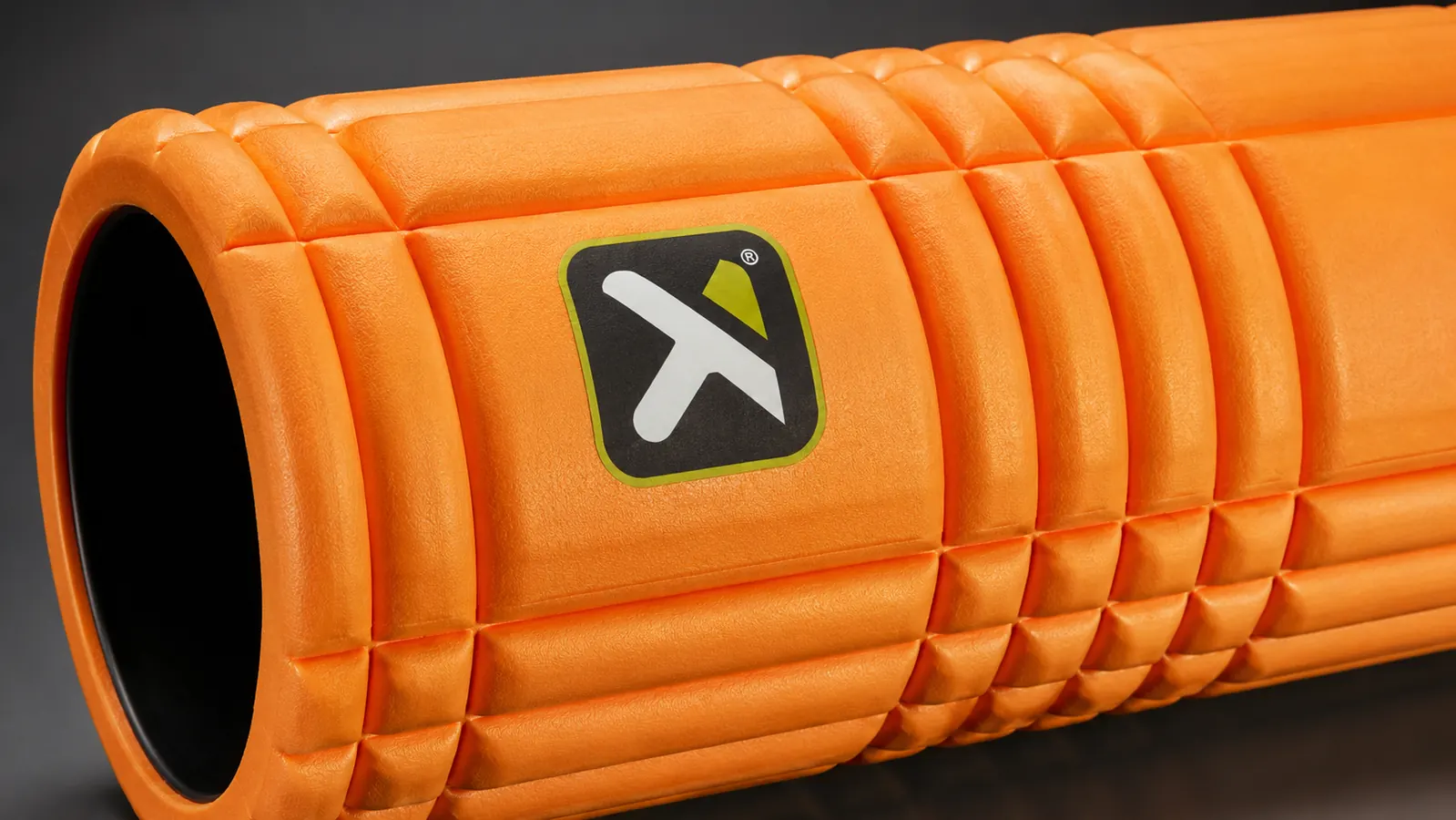
This is where most online reviews go wrong. They describe the grid pattern as 'more intense' and leave it there. What's actually happening is more specific. The GRID has three distinct surface zones: a flat section that applies broad, gentle pressure similar to a palm; a raised channel section that concentrates pressure like fingertips; and the firmer edge of each raised section that creates a localized trigger-point effect. When you move slowly over tight tissue, you're cycling between these zones in a way that's more similar to how a therapist works than what a uniform-surface roller can do.
The practical effect is most noticeable on the thoracic spine and the lateral hip. On the thoracic spine, the raised channels fall on either side of the spinous processes when you're centered correctly, which means the vertebral bodies get the pressure without the spinous processes getting compressed. That's not a minor detail. It's the difference between an extension mobilization that opens the facet joints and one that just hurts. On the lateral hip, the varied density helps you distinguish between the IT band itself (which you can't actually stretch with a roller, because it's a fibrous band, not a muscle) and the TFL and gluteus medius that attach to it and actually respond to pressure.
Slow rolling with a pause on tender spots does more in 60 seconds than two minutes of rapid back-and-forth. The GRID's surface makes the difference between those two approaches more obvious.
Chronic Tight Hips and IT Band: What 2 Weeks vs 6 Weeks Looks Like
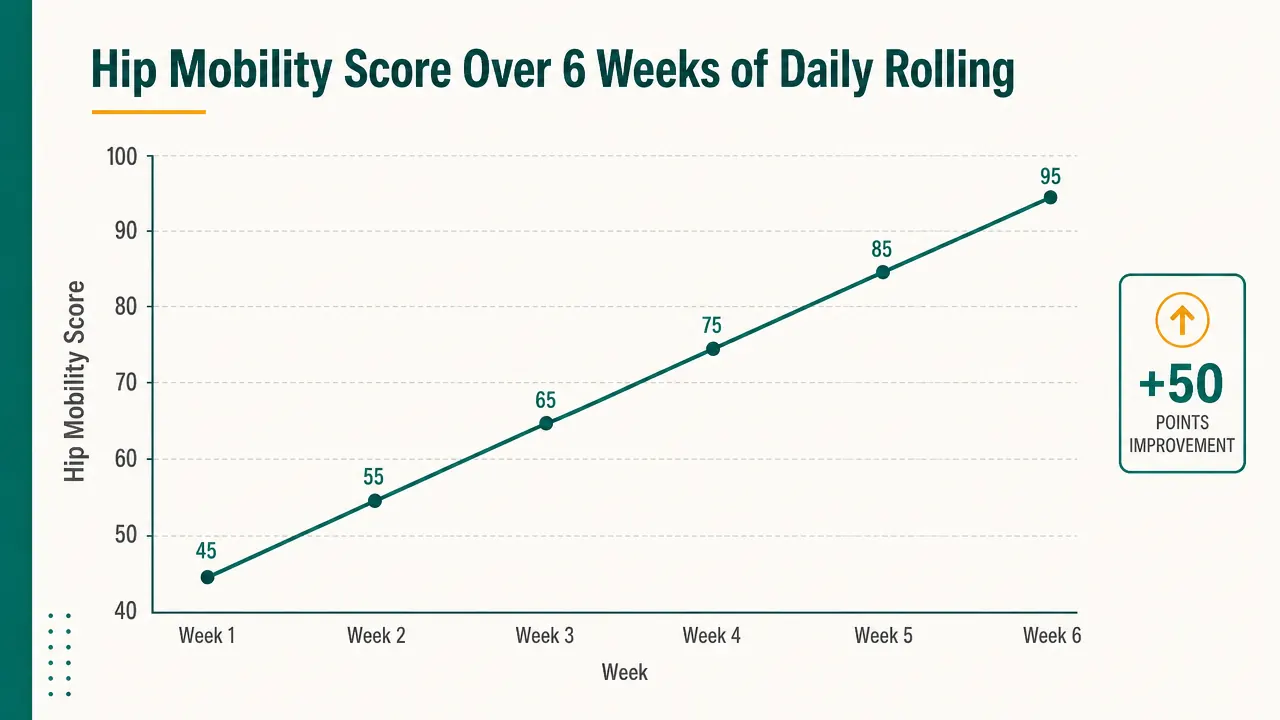
I want to be honest about the timeline here because most reviews give unrealistic expectations. At two weeks of daily rolling, 60-90 seconds on each hip region, most people notice reduced morning stiffness and a small improvement in passive hip flexion range. What you're probably feeling is improved local blood flow, reduced myofascial tone, and some neural calming of the tissue. Actual structural change in shortened hip flexors takes longer. Don't quit because you don't feel transformed at day 14.
At six weeks, the picture is different. Clients who've been consistent report that their warm-up feels easier, their first working set feels less like fighting their own body, and their post-training soreness peaks lower and clears faster. Marcus, at the six-week mark, could sit in a deep hip-flexed position for a full minute without the anterior hip pinching that used to end that stretch at 15 seconds. That's a real functional change. The GRID didn't do that alone. Daily work did. The GRID just made the daily work more effective by providing the right amount of feedback to actually find tight spots rather than roll over them.
For IT band work, the protocol matters enormously. Do not roll the IT band with body weight and speed. You will create inflammation and make it worse. Instead, use the GRID with one foot on the ground to offload 50-60% of your body weight. Move two inches, pause, breathe, feel the tissue soften slightly, move again. The whole lateral hip complex, from TFL to mid-IT band to the lateral quad, takes 90 seconds per side done this way. At six weeks of this approach, three to four times per week, most chronic IT band tightness drops meaningfully. If it doesn't, the issue is usually hip abductor weakness, not a rolling problem, and no roller will fix it.
Durability: What Two Years of Daily Use Looks Like
The hollow ABS core is the feature that makes long-term durability possible. Solid foam rollers compress over time. Under daily use by someone 185 pounds or heavier, a solid EVA roller starts losing density at the contact points within six to eight months. The surface gets a permanent flat spot and the feedback changes. The GRID's foam surface is thinner and mounted over that rigid core, so compression-related wear happens more slowly and doesn't affect the structural integrity of the roller the way it does with solid foam.
After two years, my GRID has visible surface wear on the grid pattern, particularly on the zones I use most (hip flexor and thoracic). The raised channels are slightly shorter than they were new. Functionally, it performs identically. No flat spots, no creak, no deformation. The ABS core is unchanged. I expect it to last another two to three years at minimum, which means the cost-per-day over its life is genuinely less than a mid-range flat EVA roller that I'd have replaced twice in the same period.
Upper Back and Thoracic Spine Work
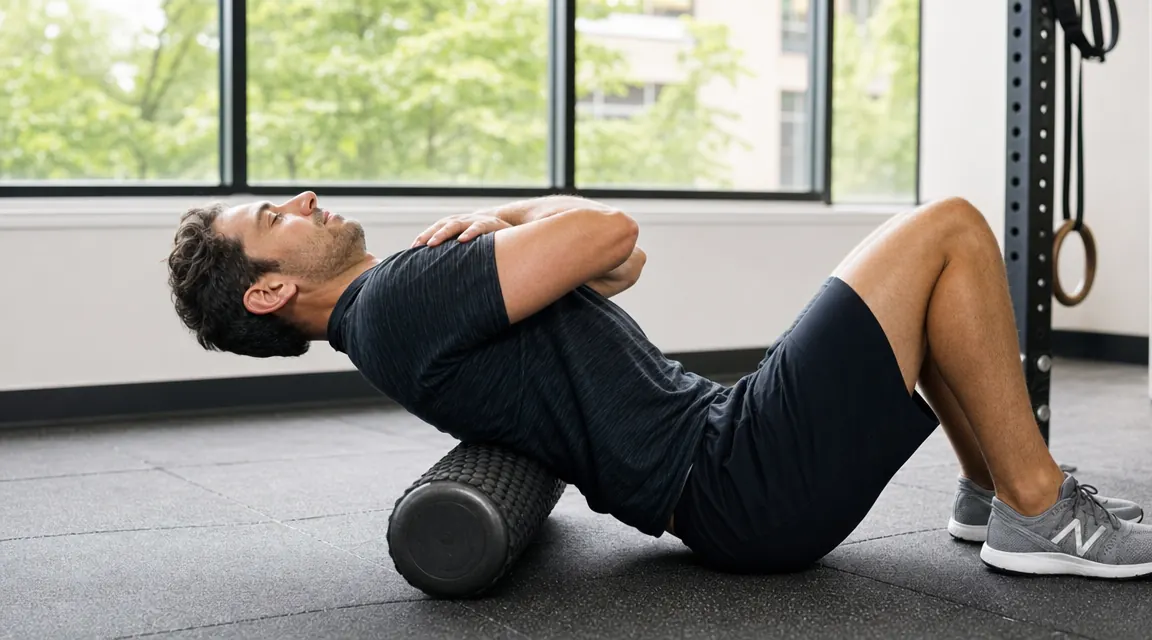
This is the GRID's single strongest application, and if thoracic mobility is your main issue, it justifies the price by itself. Position the roller perpendicular to your spine at T6 (mid-thoracic). Arms crossed over chest. Feet flat, hips bridged slightly. Breathe out and let your thoracic segment extend over the roller. Pause for 5-10 seconds. Move one vertebral segment up. Repeat from T6 to T2, which covers the area most affected by desk posture and overhead pressing restriction.
The GRID's raised channels help you feel when you're centered (spinous process tracking in the channel) vs drifted laterally. That proprioceptive feedback is genuinely useful. On a flat roller, you're guessing. On the GRID, you know. For my clients with upper-cross posture and limited shoulder elevation, this 5-minute thoracic work before overhead pressing has done more for their pressing mechanics than any cue I've given them. If you can see our TriggerPoint GRID vs Rumble Roller comparison, you'll notice the Rumble Roller's aggressive knobs are overkill here. The GRID's moderate texture is the right tool for spinal work.
What I Liked
- Multi-density surface provides three distinct pressure zones, not just 'more intense'
- Hollow ABS core prevents compression deformation under heavy daily use
- 13-inch length handles thoracic spine fully without being unwieldy for hip work
- Grid channels provide proprioceptive feedback that helps you find correct positioning
- Holds up to two-plus years of daily professional use without structural change
Where It Falls Short
- Surface foam shows cosmetic wear faster than the rigid core actually wears out
- The 13-inch length makes it harder to isolate a single hip flexor vs a 6-inch ball
- At roughly twice the price of a basic EVA roller, the delta isn't justified for twice-a-week casual use
- No significant advantage over flat foam for calf and foot work where surface texture matters less
Who This Is For
You're the right buyer for the TriggerPoint GRID if you train four or more times per week, you have a specific chronic problem area (tight hips, restricted thoracic spine, recurrent IT band irritation), and you're willing to use a protocol rather than just rolling around aimlessly. The GRID rewards intentional, slow, technique-driven rolling. It's also the right call if you've owned flat EVA rollers before and noticed they compress and degrade within a year. The durability advantage is real and the cost-per-use math favors the GRID for frequent users. Read our breakdown of 10 reasons foam rolling speeds up recovery to understand what you're actually optimizing for before you invest in any roller.
Who Should Skip It
If you roll twice a week, casually, for 5 minutes as an afterthought, a budget EVA roller will give you 80% of the benefit and it doesn't matter when it degrades because you're not using it enough to notice. If you have hypersensitive fascia (fibromyalgia, recent soft tissue injury within 6 weeks, active inflammation) the GRID's varied texture may be too much stimulus and a soft flat roller is actually the right call. Also, if your main need is foot and plantar fascia work, a lacrosse ball or a specialized foot roller serves that application better than any 13-inch cylinder. And if you're primarily a tool minimalist who wants one device that handles everything from foot to thoracic, consider whether a shorter high-density ball plus this roller is a better combination than the GRID alone.
Two years in, I'd buy the TriggerPoint GRID again without hesitation
If you're training hard and dealing with chronic hip, IT band, or upper back restriction, the build quality and surface design here are worth the price delta over flat foam. Check today's price on Amazon.
Amazon Check Today's Price on Amazon →