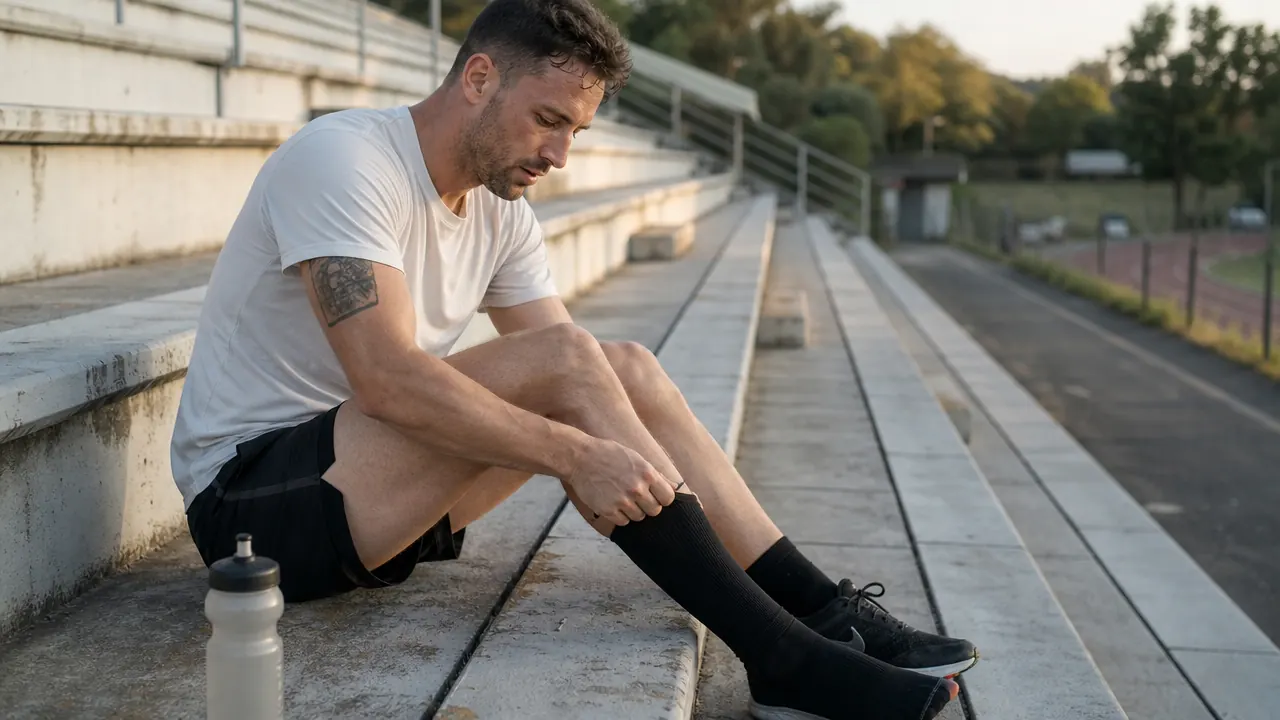
The short answer: if your goal is calf recovery, shin splint management, or keeping your legs fresh across back-to-back training days, a dedicated calf compression sleeve does that job better than a full compression sock for most athletes. The BLITZU Calf Compression Sleeve is what I point people toward when they ask which one to start with, and the reasoning goes deeper than price.
That said, compression socks are not useless. There are specific situations where full-foot coverage matters. This breakdown covers both tools honestly so you can pick the one that fits how you actually train, not just the one that shows up first in a Google search.
| Calf Compression Sleeve | Compression Socks | |
|---|---|---|
| Coverage Area | Ankle to just below the knee (footless) | Toe to just below the knee (full foot) |
| Target Use Case | Calf recovery, shin splints, running and lifting | Long-haul travel, full plantar fascia support, nursing shifts |
| Layering Flexibility | Wear over any sock or barefoot in sandals | Replaces your training sock entirely |
| Heat Management | Foot breathes freely; less heat buildup | Full foot coverage traps more heat in warm weather |
| Sizing Complexity | Sized by calf circumference (more precise fit) | Sized by shoe size + calf, more variables to get wrong |
| Price Range | Budget-friendly (BLITZU) | Mid-range to higher for graduated-compression running socks |
| Washability | Machine wash, holds compression through 50+ washes | Varies widely by brand; compression degrades faster at seams |
| Amazon Rating | 4.5 stars / 24,154 reviews | Varies by brand |
Where the BLITZU Calf Sleeve Wins
The single biggest advantage of a footless calf sleeve is targeted compression without thermal penalty. Your foot is a major heat-exchange surface. Keep it uncovered and your whole body regulates temperature better during a run, a gym session, or a recovery walk. On a hot day, compression socks can turn your foot into a slow-cooker. The BLITZU sleeve applies firm graduated pressure from the ankle to mid-calf, exactly where the gastrocnemius and soleus need venous return support, without trapping the one part of your lower extremity that actually breathes.
Shin splint management is the second win. Because the sleeve sits directly over the tibialis anterior and the medial border of the tibia, it delivers mechanical support right at the pain site. Runners managing posterior tibial stress syndrome or anterior shin splints report meaningful symptom reduction within the first two weeks of consistent wear. The BLITZU is built from a nylon-spandex blend that maintains mmHg-range pressure across multiple wash cycles, which matters because compression gear that loses elasticity quickly stops doing its actual job. With 24,154 reviews averaging 4.5 stars, the durability track record is hard to argue with.
Layering flexibility is underrated. You can pull the BLITZU over whatever sock you already have in your rotation, whether that is a thick merino wool sock for cold-weather trail running or a thin no-show for the gym. You are not locked into one specific sock system. That also means the sleeve works post-workout in sandals or recovery slides without looking like you forgot to take your compression sock off.
Your calf is still sore from Tuesday. Here is the tool that shortens that timeline.
The BLITZU Calf Compression Sleeve has 24,154 reviews and is budget-friendly. Graduated compression, footless design, machine washable. This is the one most runners and lifters reach for first.
Amazon Check Today's Price on Amazon →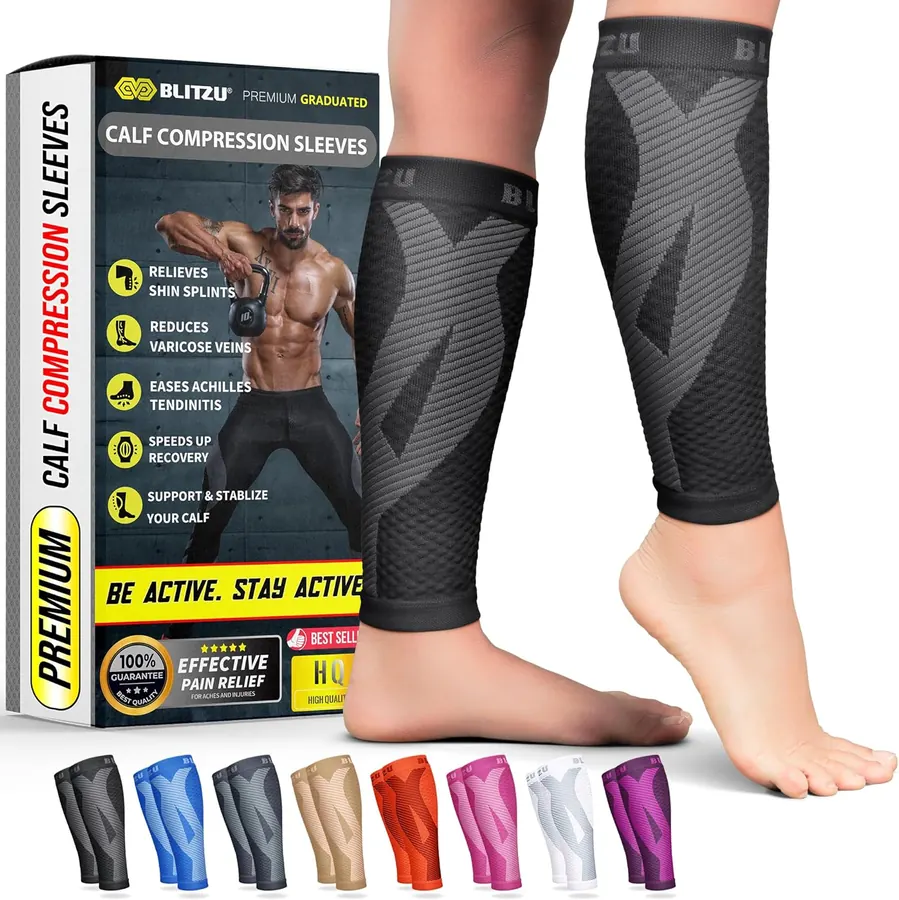
Where Compression Socks Win
Full compression socks have a real advantage when plantar fascia support is part of the picture. If you are dealing with plantar fasciitis alongside calf tightness, a sock that delivers arch compression and heel cup support covers more of the pathology in one garment. A sleeve does nothing for the arch. Same logic applies to post-surgical or post-injury edema management in the foot itself: a sleeve stops at the ankle and leaves foot swelling completely unaddressed.
Long-haul travel and sedentary compression needs also tilt toward socks. On a six-hour flight, you want the blood pooling prevention to cover the entire foot, not just the calf. Medical-grade compression socks designed for DVT prevention apply pressure across the full venous drainage pathway from the plantar veins up. For pure athletic recovery from training, this level of coverage is unnecessary for most people. But if your life involves long flights sandwiched around training blocks, a compression sock worn during the flight is the better call there.
Most athletes are training in shoes they already trust. A footless calf sleeve adds graduated compression without forcing you to rebuild your entire foot-care stack from scratch.
The Sizing Problem Nobody Talks About
Compression socks require you to match shoe size and calf circumference simultaneously. If your feet run large but your calves run narrow, or vice versa, you are almost certainly compromising somewhere. The compression you actually feel at the ankle is being determined by a garment that also has to fit your foot. Manufacturers optimize the design around the foot fit because that is what most customers try first. The calf compression is effectively whatever is left.
A sleeve eliminates this entirely. You measure your calf circumference at the widest point and pick a size. That is the whole process. The BLITZU sizing chart is straightforward: small/medium for calves under 15 inches, large/extra-large above that. The fit you get is the fit that was designed for your calf, not a fit that was engineered around a shoe last. This is why fit complaints on compression socks are structurally more common than fit complaints on sleeves. The sleeve has one job and one measurement to optimize.
Performance Over Multiple Training Days
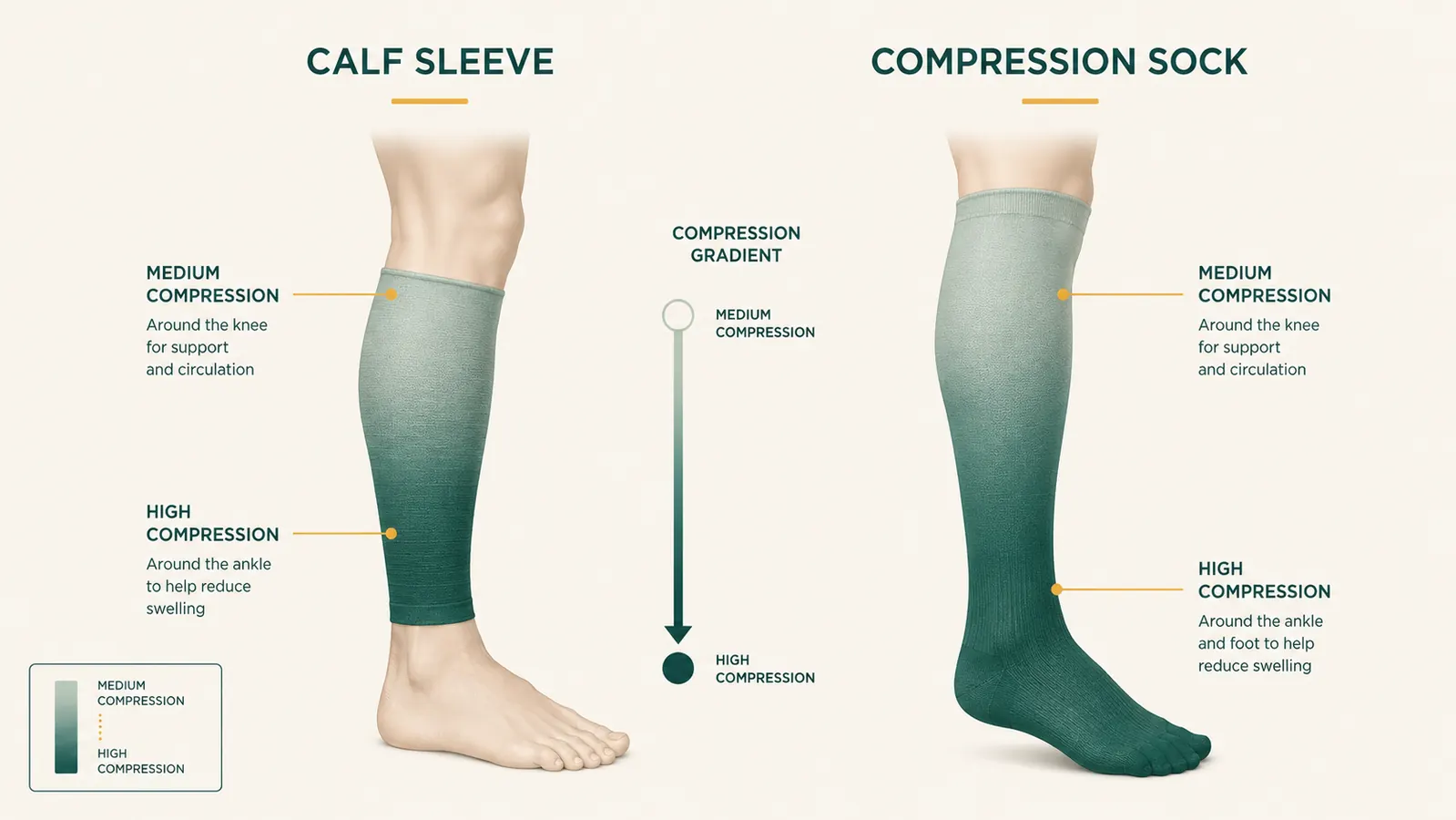
Graduated compression works by applying the most pressure distally (at the ankle) and progressively less pressure moving proximally up the calf toward the knee. This gradient encourages venous blood return against gravity, reduces muscle oscillation during impact activities, and accelerates clearance of metabolic waste from the working muscle. The clinical evidence base for this mechanism in running is solid, with multiple peer-reviewed studies showing reduced perceived soreness at 24 and 48 hours post-run in athletes using graduated calf compression.
In practical terms, I have found that wearing the BLITZU during the second half of a long run (after mile 6 or so, when calf fatigue starts to show) meaningfully reduces the depth of soreness the following morning. The effect is not magic. You still have to manage your training load, sleep, and nutrition. But it shortens the recovery curve reliably enough that I now consider it a standard piece of kit, sitting next to the foam roller and the magnesium capsules as part of the post-workout routine rather than an optional add-on.
Compression socks can deliver the same circulatory benefit if they fit correctly. The challenge is consistency. If the sock bunches at the arch or creates a pressure band at the top cuff due to sizing mismatch, the graduated gradient is disrupted. The sleeve, because it starts at the ankle and ends cleanly at the knee without the foot variable, is far more likely to deliver consistent gradient pressure session after session.
Who Should Buy Which
Get the BLITZU Calf Compression Sleeve if you are a runner, cyclist, or gym athlete dealing with calf tightness, DOMS in the gastrocnemius-soleus complex, or any degree of shin splint presentation. It is also the right call if you want to add compression to your existing sock rotation without replacing it, or if you run hot and need your foot to breathe. At the current price point it is one of the lowest-cost, highest-return additions to a recovery toolkit.
Consider full compression socks instead if plantar fascia pain is your primary complaint alongside calf issues, if you are managing post-surgical lower-leg edema, or if you need compression for long periods of sedentary travel rather than active recovery. For those specific contexts, the foot coverage matters and a sock is the appropriate tool. Just know that sizing will require more careful attention and the compression delivered to your calf may be less precise.
For the majority of people reading this, which is to say active adults whose main issue is calf soreness and recovery between training days, the BLITZU sleeve is the better starting point. It is cheaper, easier to size, more versatile to layer, and purpose-built for the exact tissue you are trying to recover. For more detail on how the sleeve performs across a full training block, read the long-term BLITZU Calf Compression Sleeve review. If you want a step-by-step wear protocol including how long to keep it on post-run and how to combine it with other recovery tools, the guide on using a calf compression sleeve for recovery covers the practical application in full.
Two weeks of consistent post-run compression changes how sore your calves are the next morning.
The BLITZU Calf Compression Sleeve is footless, machine washable, and built for the active recovery timeline. 24,154 reviewers have put it through real training loads. Check the current price and size chart on Amazon.
Amazon Check Today's Price on Amazon →