
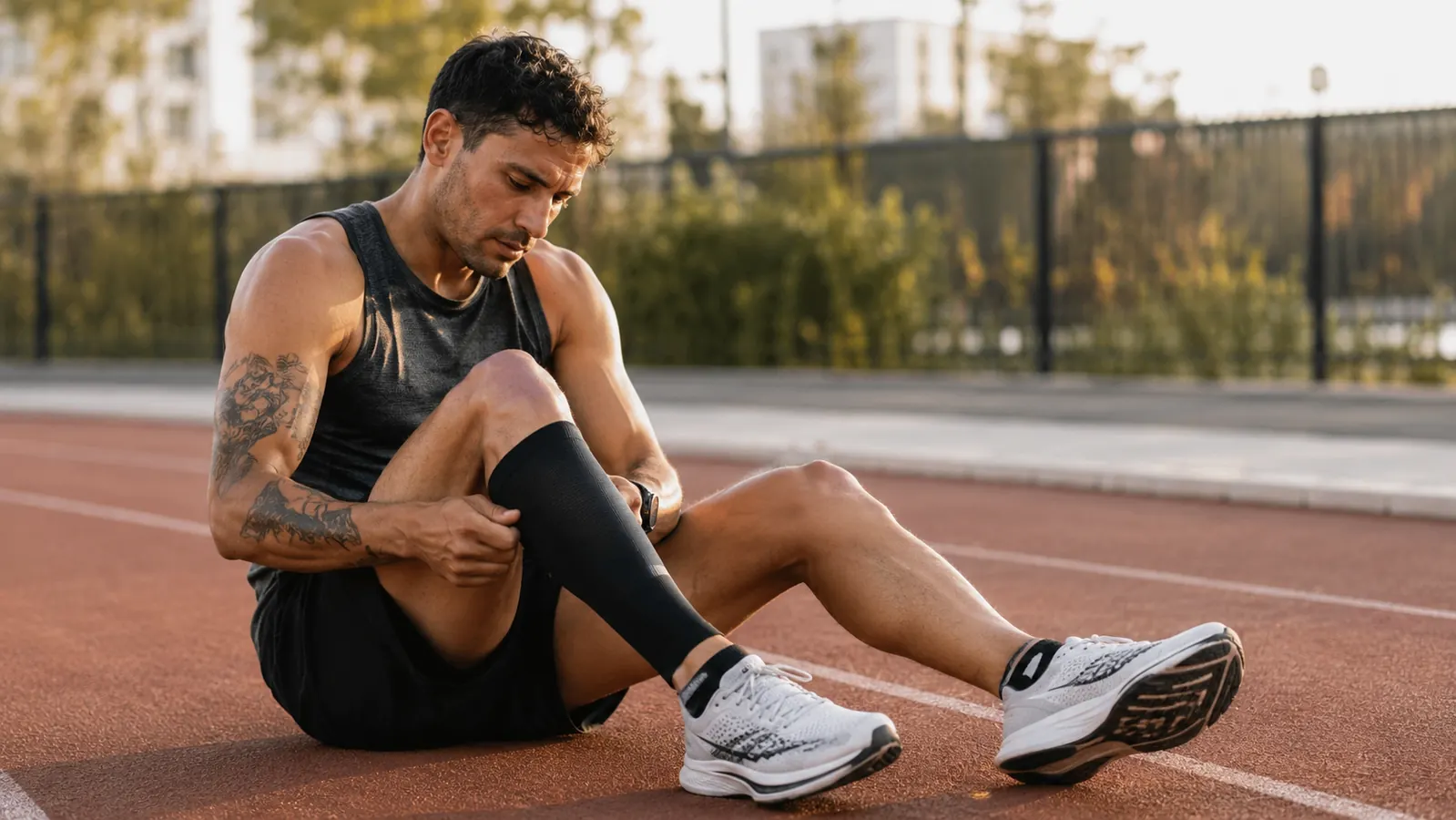
If your calf compression sleeve is just sitting in a gym bag, you are not using it. And if you only pull it on right before a run and take it off the second you stop, you are getting maybe 20 percent of the benefit the research supports. The timing windows, the fit check, the duration limits -- these details are what separate a sleeve that actually reduces delayed-onset muscle soreness from one that just looks like you know what you are doing.
I work with recreational runners and strength athletes who train three to six days a week. The most common mistake I see: people either skip compression entirely during the critical post-exercise window, or they wear the sleeve so loosely it generates zero meaningful gradient pressure. This guide gives you the exact protocol I hand to athletes during a half-marathon training block -- when to put the sleeve on, how long to leave it, what too-tight actually feels like, and how to extend the life of the sleeve itself. The BLITZU Calf Compression Sleeve (ASIN B0186EMILU, rated 4.5 stars across 24,000-plus reviews) is what I use to demonstrate these steps because it runs true to size and has consistent compression across its length. That said, the protocol applies to any gradient-compression sleeve.
Your calves are still sore from Tuesday because the recovery window closed without compression.
The BLITZU Calf Compression Sleeve is budget-friendly and ships Prime. Check sizing before you buy -- the size chart on the product page uses calf circumference, not shoe size.
Amazon Check Today's Price on Amazon →Step 1: Size the Sleeve Before You Do Anything Else
Compression sleeves are sold by calf circumference, not by shoe size or general S/M/L clothing conventions. Measure the widest part of your calf while standing -- typically 4 to 6 inches below the back of the knee. Write that number down. For the BLITZU sleeve: XS fits 11 to 13 inches, S/M fits 13 to 15 inches, L/XL fits 15 to 17 inches, and XXL fits 17 to 20 inches. If you are between sizes, size down. Gradient compression only works when there is actual compressive force on the tissue -- a loose sleeve is just a glorified sock.
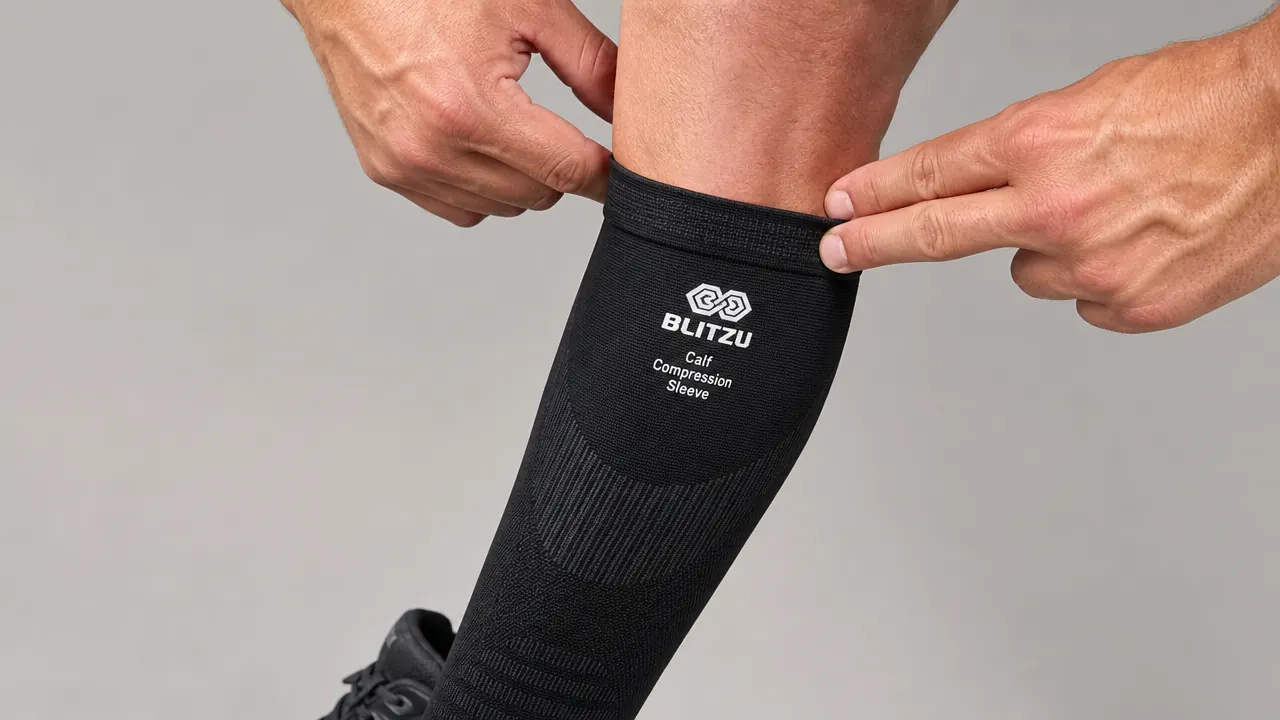
The two-finger rule is the quick field check: slide two fingers under the top band of the sleeve. They should slide under with moderate resistance, not glide freely. If you can slide a full fist under the band, the sleeve is too large. If you cannot get even one finger under the band after five minutes of wear, or if you feel tingling, numbness, or pulsing in the foot, the sleeve is too tight. Tingling in the foot is the most important warning sign -- remove the sleeve immediately and size up before the next use.
A correctly sized sleeve should feel snug but not restrictive. You should be able to dorsiflex your ankle fully (pull the toes toward the shin) without the sleeve cutting into the back of the knee. If the top band rolls down within 15 minutes of activity, the sleeve is either too small in diameter or the calf shape requires a different sleeve style. Rolling down is usually a fit problem, not a washing problem.
Step 2: Wear During Exercise -- But Only for the Right Sessions
During-exercise use is appropriate for running, hiking, cycling, and any sport involving prolonged calf loading. The mechanism during activity is vibration dampening and proprioceptive feedback, not primarily circulation -- the pump action of the calf muscle itself dominates venous return during exercise, so the sleeve's contribution shifts toward reducing soft-tissue oscillation and supporting the musculotendinous junction. If you have a history of medial tibial stress syndrome (shin splints), during-exercise compression is one of the more evidence-supported adjunct tools available. The BLITZU sleeve covers the shin and extends from the ankle to just below the knee, which places it directly over the tibialis anterior and posterior where shin splint pain typically lives.
Do not wear compression sleeves during heavy lower-body lifting sessions in a non-running context. Squatting and deadlifting require full calf and tibialis recruitment, and a snug sleeve can subtly alter proprioceptive feedback in ways that affect ankle stability under load. Save compression for runs, long walks, and conditioning work. For the weight room, leave the sleeves in the bag until the training session ends.
Step 3: The 90-Minute Post-Exercise Window Is When Compression Matters Most
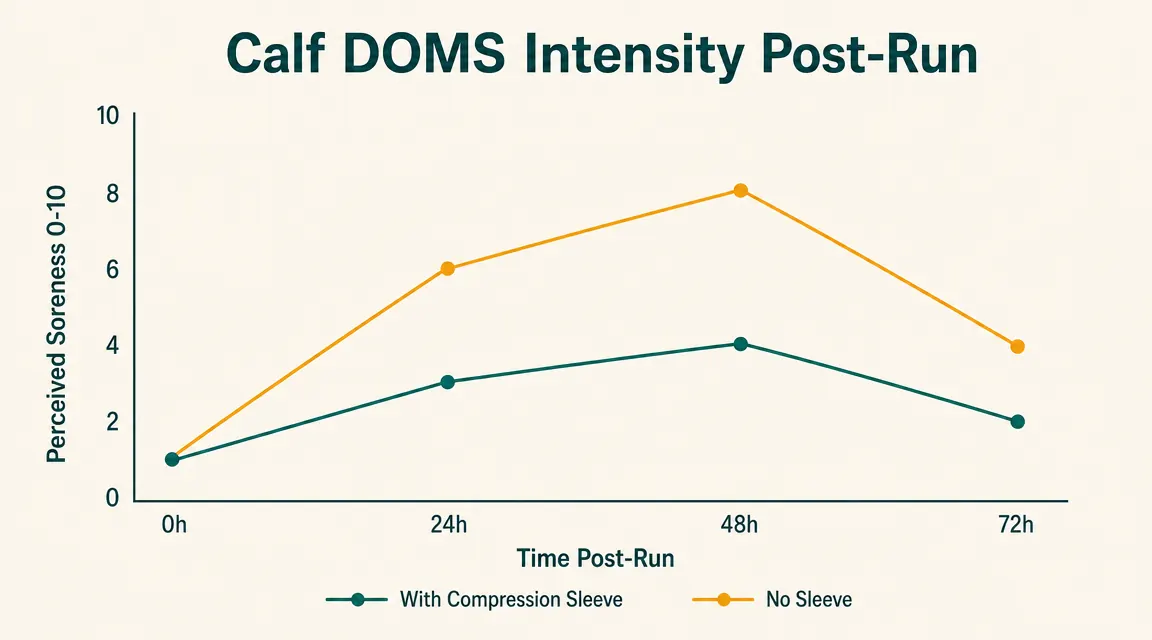
If you take off your shoes after a run and immediately put on compression sleeves, you are in the optimal window. The 90 minutes following aerobic exercise is when local inflammation and fluid pooling in the lower leg are most active. Compression during this period applies graduated external pressure that supports venous return and lymphatic drainage -- essentially, it helps metabolic waste products clear the tissue faster than passive rest alone. Studies on endurance athletes consistently show reductions in post-exercise limb circumference (a proxy for swelling) when compression is applied in the first hour after exercise versus delayed application or no compression.
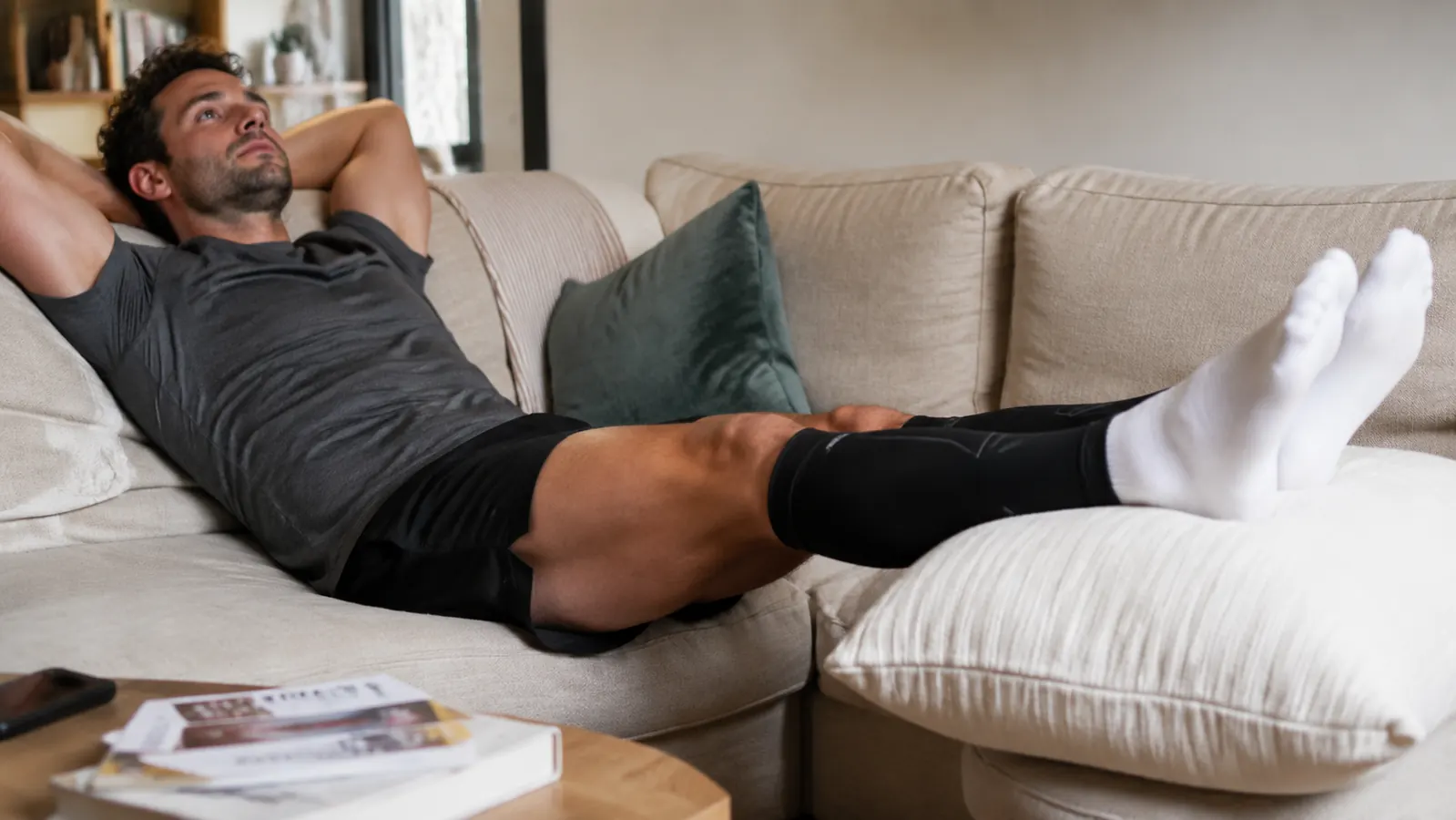
The protocol I use with athletes: immediately after finishing a run, sit or lie down with legs slightly elevated, pull on compression sleeves before the cool-down stretch routine, and keep them on for a minimum of 60 minutes and up to 3 hours post-exercise. If you have time, two to three hours of post-run compression consistently produces the best next-day outcome for calf and shin soreness in my experience. Do not eat lunch and immediately stand for an hour -- the hydrostatic pressure from standing works against the drainage you are trying to create. Recline or elevate the legs above heart level if you can.
The 90 minutes after a run is when compression actually changes your next-day soreness. Put the sleeve on before you even untie your shoes.
Step 4: Sleep and Travel -- When to Use Extended Wear (and When to Stop)
Overnight wear with compression sleeves is a common question, and the answer is nuanced. For healthy adults with no cardiovascular conditions, wearing a well-fitted, graduated compression sleeve (18 to 21 mmHg class, which is what most sport sleeves like the BLITZU target) overnight after a particularly hard session is generally safe and can reduce morning calf tightness after long runs or races. The caveat: your calf circumference decreases during overnight rest, so the sleeve that fit perfectly in the afternoon may feel too tight on a leg that has not been moved in four hours. If you wake up with foot numbness or tingling, remove the sleeve. For most people, three to four hours of post-run compression followed by removing the sleeve before sleep is a simpler and equally effective protocol.
Long-haul travel is a clear use case for extended wear. Economy seating compresses the popliteal vein behind the knee, which increases lower-leg fluid pooling over flights longer than three hours. Wearing calf compression sleeves from the time you board until you land reduces the swelling that leaves your calves feeling like sandbags when you deplane. This is not a performance optimization -- it is basic circulatory hygiene on long flights. The same principle applies to long car drives. Pack a pair of compression sleeves in your carry-on if you travel to races or competitions.
Maximum single-session wear for sport sleeves is generally cited as 8 hours. Beyond that, the gradient compression that makes these sleeves effective becomes difficult to maintain as the fabric fatigues and the leg adjusts to the pressure. If you are wearing a sleeve for eight consecutive hours and it still feels snug, take a 30-minute break to let the tissue breathe, then reapply if needed.
Step 5: Washing Protocol and When to Replace
The single fastest way to destroy compression in a sport sleeve is to put it in a hot dryer. Heat degrades the elastane fibers that create gradient compression, and after two or three dryer cycles at high heat, you are wearing a tube sock with branding on it. The correct protocol: hand wash in cool water with mild detergent, or machine wash on a cold delicate cycle inside a mesh laundry bag. Air dry flat or hang to dry. This applies to the BLITZU sleeve and virtually every sport compression sleeve on the market. If you train daily, budget for two pairs so one is always clean and dry.
Compression sleeves have a functional lifespan. A sleeve that is washed correctly and worn three to four times per week typically maintains effective compression for four to six months. The field test: put on the sleeve, let it sit for five minutes, then pull it down two inches and release. A sleeve with functional compression should snap back to its original position immediately. If it creeps back slowly or stays where you moved it, the elastane is fatigued and the sleeve needs to be replaced. At the BLITZU price point, replacing it every four to five months is not a meaningful cost.
What Else Helps
Compression is one tool in the recovery toolkit, not a standalone solution. The athletes who recover fastest from hard running weeks layer compression with two or three other practices consistently. Elevating the legs above heart level for 10 to 20 minutes immediately after a run addresses fluid pooling from the gravity side that compression handles from the pressure side -- together they clear the lower legs faster than either alone. Foam rolling the calf (proximal to distal, meaning from below the knee toward the ankle) for five minutes before applying compression helps loosen the fascia and makes the sleeve's pressure more uniform across the tissue. If you are dealing with active shin splint inflammation in the first 48 to 72 hours after a flare-up, ice before applying compression -- heat during the acute inflammatory phase prolongs soreness rather than reducing it. After 72 hours, when the inflammation has subsided, moist heat before compression will feel significantly better and may improve local tissue extensibility. If you want a deeper dive into sizing, durability, and real-world training results, read the full BLITZU Calf Compression Sleeve long-term review. If you are weighing whether a sleeve is the right tool or whether compression socks make more sense for your training, the 10 reasons calf compression helps runners article breaks down the physiology in plain language.
You now have the protocol. The sleeve that most consistently fits true to size for this use case is the BLITZU.
At the current price, it is one of the lowest-cost-per-use recovery tools you can add to a training week. Check sizing on the product page using calf circumference before ordering.
Amazon Check Today's Price on Amazon →