

Most athletes who try magnesium glycinate quit after two weeks because they did one of three things wrong: they took too little elemental magnesium, they took it at the wrong time, or they took it on a completely empty stomach and woke up with loose stool wondering what happened. The supplement works. The protocol is what trips people up. I've been using magnesium glycinate as part of a structured recovery stack through a 16-week strength block, and the difference between a 200mg night and a properly timed 400mg dose split across the day is not subtle. Here is exactly how to do it right.
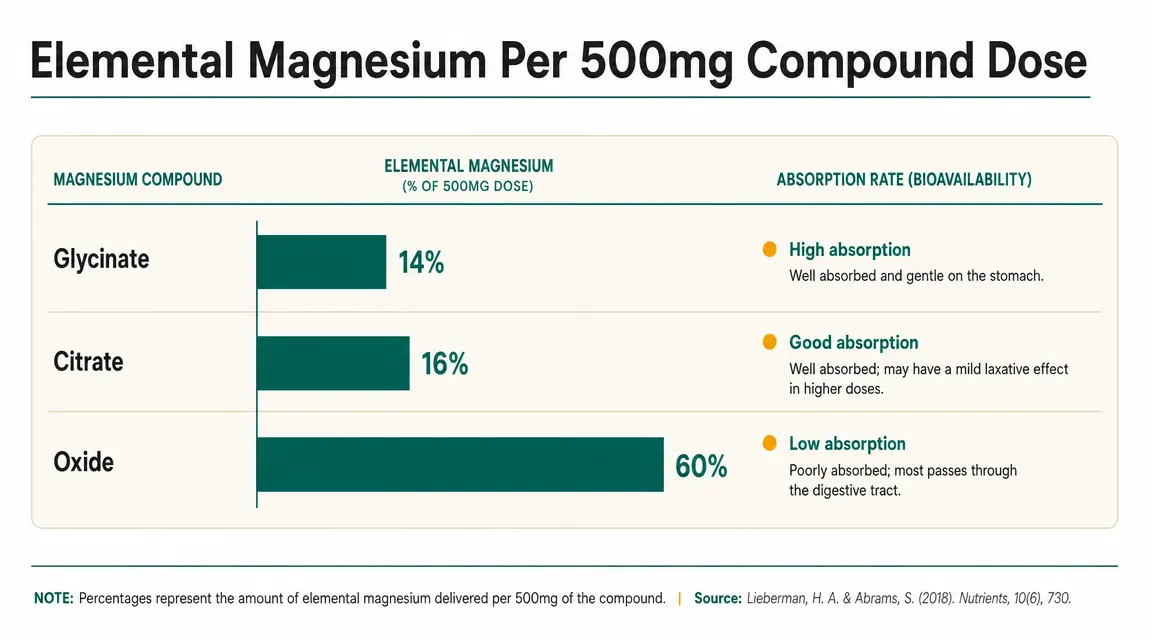
One number to keep in mind before we get into steps: the RDA for magnesium is 420mg per day for adult men and 320mg for adult women, and most people who train hard are running a consistent deficit. Sweat alone can deplete 36mg of magnesium per liter. If you train five days a week, the shortfall adds up fast. NatureBell Magnesium Glycinate 500mg lists 500mg of magnesium glycinate per two-capsule serving, which delivers approximately 70mg of elemental magnesium per serving at the standard 14% elemental ratio. That matters because the '500mg' on the label is the weight of the whole chelated compound, not the actual mineral content. We'll account for this in the dosing steps.
You're already training hard. This is the one micronutrient most athletes are quietly short on.
NatureBell Magnesium Glycinate delivers 240 veggie capsules at one of the cleanest formulations on Amazon. Rated 4.7 stars across 18,000+ athlete reviews.
Amazon Check Today's Price on Amazon →Step 1: Calculate Your Actual Elemental Magnesium Need
Before you open the bottle, know what number you are targeting. For most training adults, a supplemental target of 200-400mg of elemental magnesium per day is appropriate, depending on how much you get from food (nuts, seeds, leafy greens, legumes). If your diet is reasonably varied and you eat meat and vegetables, assume you are getting 150-250mg from food. That means you need 100-200mg of elemental magnesium from supplementation to close the gap without going over.
With NatureBell's glycinate formula, two capsules deliver roughly 70mg of elemental magnesium. Four capsules deliver around 140mg. Six capsules (the upper end of common use) deliver around 210mg. Most recreational athletes doing 4-5 sessions per week do well with 4-6 capsules spread across the day. If you are dealing with active muscle cramping at night or significant sleep fragmentation during high-volume training phases, you can go up to 8 capsules, which puts you near 280mg supplemental elemental. Do not exceed 350mg of supplemental elemental magnesium without discussing it with your doctor, particularly if you have any kidney function concerns. We will cover who should skip this entirely in the contraindications section.
The practical takeaway: count capsules, not the mg number on the label. Two capsules is a low dose for an athlete. Four is a solid working dose for most people. Six is appropriate for heavy training blocks or anyone with a documented deficiency.

Step 2: Split Your Daily Dose , Half With Food, Half Before Bed
Taking your entire daily dose in one sitting is the most common mistake. A large bolus dose of magnesium glycinate hit at once can cause loose stool or a pronounced drowsiness at the wrong time of day. The glycinate chelate is significantly gentler than magnesium oxide or citrate, but it is not immune to this effect at high single doses. Splitting the dose solves both problems.
Take half your target dose with your largest meal of the day, usually lunch or dinner. The food slows absorption slightly, which improves tolerance and spreads the mineral load across a longer absorption window. Take the second half 30-60 minutes before bed. This is the clinically relevant timing for sleep and recovery benefits: magnesium's role in GABA receptor activation and cortisol modulation works best when blood levels are rising as you wind down. You are not trying to knock yourself out; you are giving your nervous system the signal that it is safe to downregulate.
For a four-capsule daily dose: two capsules with dinner, two capsules 45 minutes before you plan to be in bed. For a six-capsule dose: two with lunch, four (or two and two split between dinner and bed) in the evening. You will notice within the first week whether your sleep architecture improves. Most athletes report the clearest sign is waking up feeling less rigid in the hips and lower back, not simply feeling more rested.
Step 3: Take It With a Small Amount of Food , Not on a Completely Empty Stomach
Magnesium glycinate has the lowest GI side-effect profile of any common magnesium form. That does not mean you should take six capsules on a fasted stomach at 5am before your morning run. A small food buffer, even 100-150 calories worth, meaningfully reduces the chance of any cramping or loose stool. A handful of almonds, a tablespoon of peanut butter, or a small yogurt before your bedtime dose is enough.
The mechanism is straightforward: fat and protein in the stomach slow gastric emptying, which gives the mineral chelate more time in the upper GI tract where absorption is most efficient. Taking magnesium on an empty stomach pushes it through faster, which means more unabsorbed magnesium reaches the large intestine, where it pulls water into the colon. That is what causes the laxative effect. Taking it with even a modest amount of food almost entirely prevents this.
The difference is not whether magnesium glycinate works. The difference is whether you get the mineral or send it through you. Food is the variable that determines which one happens.

Step 4: Build Up Over the First Two Weeks
Start at two capsules per day for the first week. This is not a therapeutic dose; it is a tolerance-building phase. Your gut microbiome and GI tract need a short adjustment window with any new mineral supplement. Even with the gentle glycinate chelate, some individuals experience mild GI sensitivity in the first 7-10 days. Starting low and titrating up eliminates almost all of this.
In week two, move to four capsules split as described in Step 2. By week three, if you are targeting six capsules, add the additional two. Most athletes are at their full working dose by the end of week three. From there, expect the most noticeable sleep and cramp-reduction effects to build over the following 4-6 weeks as intracellular magnesium levels replenish. Serum magnesium normalizes faster than intracellular magnesium. The real-world functional improvements (sleep depth, cramp frequency, next-day soreness) track with intracellular repletion, not serum levels, which is why people who try magnesium for one week and declare it doesn't work have simply not given the protocol enough time.
Step 5: Stack Thoughtfully , What Works With Magnesium Glycinate and What Interferes
Magnesium glycinate pairs well with a few specific supplements and poorly with others. For recovery-focused stacking, the most evidence-supported combination is magnesium glycinate plus zinc. The two minerals work together in testosterone synthesis, immune function, and sleep quality, and many athletes who already use a ZMA supplement are essentially already doing this. If you are taking a ZMA product, check whether it already contains magnesium. If it does, reduce your standalone glycinate dose accordingly to avoid over-supplementing.
Vitamin D3 and magnesium have a well-documented co-dependency: D3 cannot be properly activated without sufficient magnesium, and magnesium absorption is enhanced by adequate D3. If you are taking D3 (which most indoor athletes probably should be), taking your glycinate capsules at the same mealtime as your D3 is a sensible pairing. Glycine itself, the amino acid that the chelate is bound to, has independent sleep-quality research behind it. There is some rationale for stacking magnesium glycinate with standalone L-glycine (2-3g) before bed for athletes in particularly brutal training phases, though the additional cost-to-benefit case is modest.
What to avoid timing near your magnesium dose: calcium in large doses (500mg or more of calcium competes directly with magnesium for absorption in the small intestine), iron supplements (same mechanism), and high-dose zinc (competitive absorption above 40mg zinc). If you take any of these, separate them by at least two hours from your magnesium glycinate.
Who Should Skip Magnesium Glycinate (Or Talk to a Doctor First)
Magnesium supplementation is broadly safe for healthy adults, but there are four categories of people who should not add it without a medical conversation. First, anyone with chronic kidney disease or reduced kidney function. Healthy kidneys efficiently excrete excess magnesium. Kidneys that are not functioning normally can allow magnesium to accumulate to levels that cause hypermagnesemia, which is a serious condition. If you have ever been told your kidney function is abnormal, or if you have a disease like diabetes that can affect kidney health over time, check with your doctor before supplementing.
Second, anyone taking certain medications. Magnesium interacts with a specific list of drugs including bisphosphonates (osteoporosis medications), some antibiotics (particularly quinolones and tetracyclines), diuretics, and proton pump inhibitors. Some of these interactions reduce drug absorption; others affect how your body manages magnesium levels. If you take any prescription medication regularly, a 60-second check with your pharmacist or prescribing physician is worth doing.
Third, anyone on a dialysis protocol. Dialysis patients have their mineral levels managed externally and should not supplement magnesium without explicit guidance from their nephrologist. Fourth, anyone with a cardiac arrhythmia or who has had recent cardiac intervention. Magnesium plays a direct role in cardiac electrical conduction, and while supplementation at these doses is usually benign for healthy hearts, it is not a self-prescribing decision in the setting of an active cardiac condition.
For the vast majority of healthy adults who train regularly, none of these apply. But the contraindications matter enough to state clearly. If you are unsure whether any of them apply to you, a five-minute conversation with your doctor costs nothing and answers the question definitively.
What Else Helps Your Body Use Magnesium Better
Supplementation is only part of the picture. Alcohol significantly depletes magnesium through increased urinary excretion. If you are training hard and drinking regularly, you are fighting two battles at once. Reducing alcohol intake during high-volume training blocks meaningfully improves your magnesium status on top of anything you supplement. High caffeine intake has a similar, though more modest, effect. Chronic high stress (elevated cortisol) increases magnesium excretion, which creates a feedback loop where the athletes who most need better recovery also burn through their magnesium fastest.
Sleep hygiene works synergistically with magnesium. The pre-bed timing of your glycinate dose is most effective when combined with a consistent wind-down routine, a cooler room temperature (around 65-68F), and screen reduction in the 30-45 minutes before bed. You are not asking the magnesium to do all the work. You are creating conditions where the biological signals it supports, reduced cortisol, GABA activation, muscle relaxation, actually have a chance to run their course.
For a deeper look at why glycinate specifically outperforms other forms for athletes, and how NatureBell's 500mg formula stacks up in terms of label accuracy and cost-per-dose, see the NatureBell Magnesium Glycinate long-term review. And if you are still on the fence about whether magnesium belongs in your stack at all, the 10 reasons magnesium glycinate helps athletes covers the evidence base from sleep quality through cortisol regulation.
If you're training 4-5 days a week, there's a strong chance magnesium is the gap in your recovery stack.
NatureBell Magnesium Glycinate , 240 veggie capsules, 100% chelated, no unnecessary fillers. The math on cost-per-dose is hard to beat at this rating level.
Amazon Check Today's Price on Amazon →