

If you train hard and sleep poorly, someone has probably told you to take magnesium. That advice is correct. But the form you choose matters more than most people realize. Magnesium glycinate and magnesium citrate sit in the same supplement aisle, share the same active mineral, and often cost within a few dollars of each other. The difference shows up later, when one of them is quietly wrecking your GI tract at 10 p.m. while the other is helping you slide into deep sleep after a heavy leg session.
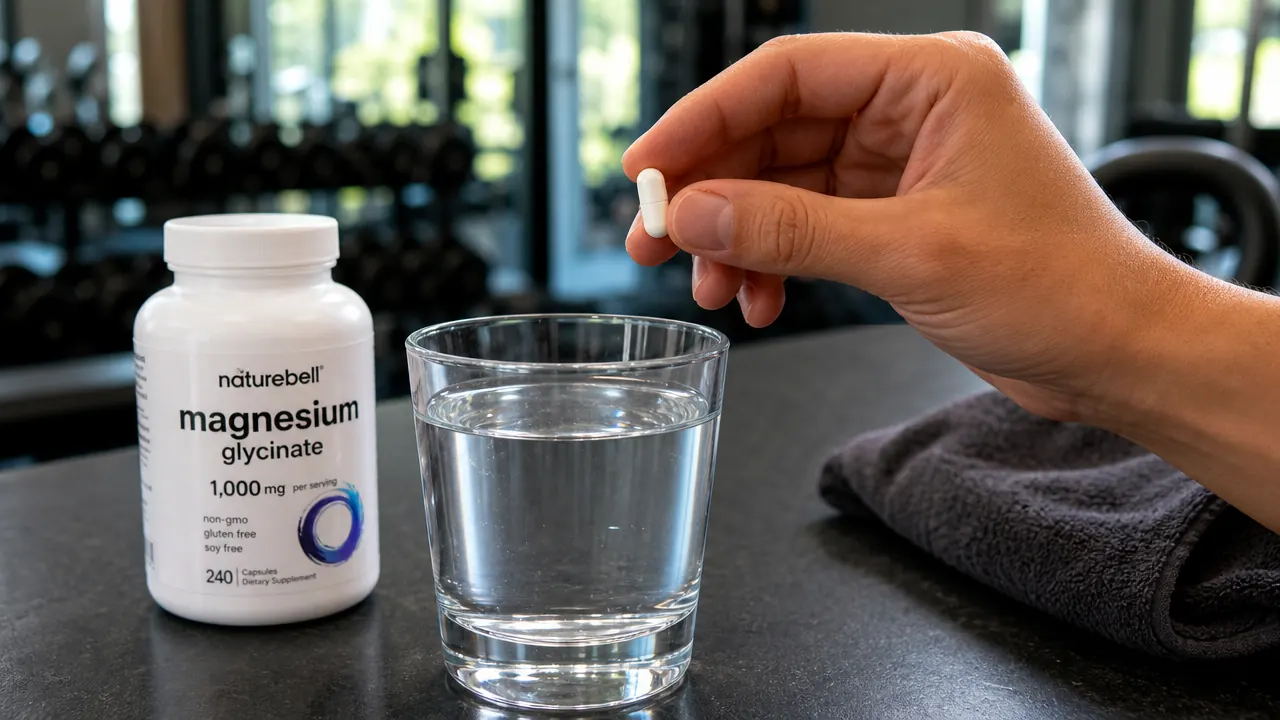
Short answer: for athletes who train 4 or more days per week and want magnesium to support sleep quality, reduce nocturnal cramping, and improve next-day readiness, magnesium glycinate wins. Citrate is a legitimate option for general deficiency correction or occasional constipation relief, but its laxative effect at recovery-relevant doses makes it a poor fit for consistent nightly use. NatureBell's 500 mg chelated magnesium glycinate capsules are our top pick for the recovery use case, and the rest of this piece explains exactly why.
| Factor | Magnesium Glycinate (NatureBell) | Magnesium Citrate |
|---|---|---|
| Form | Chelated (bound to glycine) | Salt form (bound to citric acid) |
| Bioavailability | High , glycine chelation resists degradation in the gut | Moderate-high , good absorption but pH-dependent |
| GI Tolerance | Excellent , rarely causes loose stool even at 400 mg elemental | Variable , laxative effect increases noticeably above 300 mg elemental |
| Elemental Mg per dose (NatureBell) | ~100 mg per 2 capsules (500 mg compound) | Varies by brand, typically 150-200 mg per tablet |
| Sleep Quality Benefit | Strong , glycine co-transport has independent calming effect on CNS | Mild , no secondary CNS benefit from the citrate carrier |
| Best Use Case | Nightly recovery, sleep optimization, cramp reduction in athletes | Correcting acute deficiency, constipation relief, occasional use |
| Typical Price Range | 240 capsules (120 servings) | Comparable pricing for similar serving count |
| Upset Stomach Risk | Low | Moderate to high at higher doses |
Where Magnesium Glycinate Wins
The glycinate form's biggest advantage is the chelate structure itself. When magnesium is bound to glycine, an amino acid, the compound survives the acidic environment of the stomach better than simpler salt forms. That means more of what you swallow actually reaches the small intestine and gets absorbed into circulation. For athletes who are already depleted because sweat losses during training pull magnesium out faster than diet replaces it, that absorption efficiency is the whole game.
The second advantage is glycine itself. Glycine is an inhibitory neurotransmitter precursor with its own independent research on sleep quality. Taking magnesium glycinate at night is not just replacing a mineral, it is delivering both magnesium and a glycine load that works through NMDA receptor modulation to lower core body temperature and support the transition into deeper sleep stages. Multiple studies on athletes measuring sleep architecture have found glycine supplementation alone shortens time to sleep onset. You are getting that benefit as a bonus with every dose of the chelated form. Citrate gives you none of that.
The GI tolerance advantage is the clincher for anyone taking magnesium daily. Athletes who train in the evening and take a recovery dose before bed simply cannot afford the 3 a.m. bathroom trip that higher-dose citrate sometimes triggers. NatureBell's 500 mg compound per 2-capsule serving delivers roughly 100 mg of elemental magnesium, a dose well within the range that is effective without crossing the osmotic threshold that causes citrate's laxative action. Over 18,000 reviewers and a 4.7-star average suggest the GI experience is clean for the vast majority of users.
Where Magnesium Citrate Wins
Citrate is not a bad supplement. It is simply the wrong supplement for most athletes using magnesium as a nightly recovery tool. Where citrate genuinely shines is acute deficiency correction when speed of repletion matters more than GI comfort, because it does absorb well and the doses per tablet tend to be larger. For someone who has been significantly deficient for months and needs to move serum levels fast, a short course of citrate under a doctor's guidance can make sense.
Citrate is also a legitimate over-the-counter option for people using magnesium specifically for constipation relief, since the osmotic effect is the intended mechanism in that context. If your primary goal is GI motility rather than sleep and muscle recovery, citrate does that job effectively and inexpensively. It is also sometimes the more readily available form in rural pharmacies when glycinate is not stocked. Cost can be marginally lower per gram of elemental magnesium depending on brand, though the gap is small enough that it rarely drives a decision.
Train hard, sleep deep: NatureBell's chelated glycinate is the form built for nightly recovery
240 veggie capsules, 100% chelated for maximum absorption, no laxative effect at recovery doses. Over 18,000 athletes rate it 4.7 stars.
Amazon Check Today's Price on Amazon →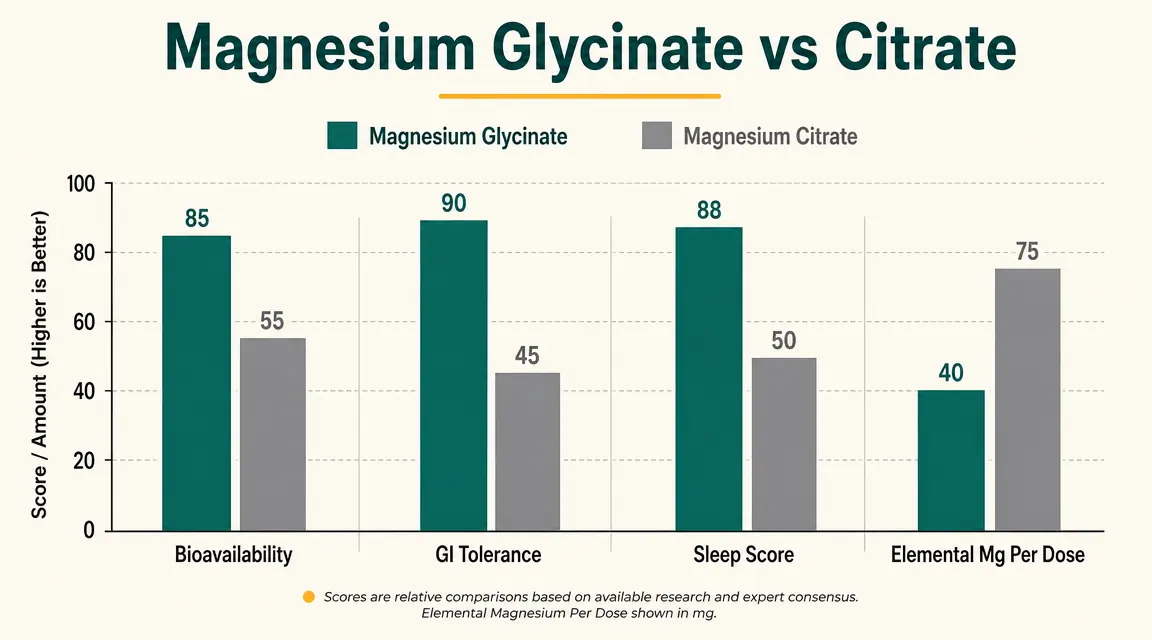
Absorption Deep Dive: Why Chelation Changes the Numbers
Bioavailability is not a single number, it is a range that shifts depending on your gut pH, what you ate before the dose, and how depleted you already are. That said, the research consistently places chelated magnesium forms at the high end of the bioavailability spectrum. A 2019 study in Magnesium Research comparing chelated and non-chelated magnesium forms found that amino acid chelates showed superior absorption over a 60-day supplementation period in adults with documented deficiency. Citrate performed better than oxide (the cheap filler form in most multivitamins) but fell short of the chelated amino acid forms on retention.
The practical implication is dosing efficiency. If you are taking 400 mg of elemental magnesium from citrate and only absorbing 65 percent, you are getting roughly 260 mg into circulation. The same elemental dose from a chelated glycinate at 80 percent absorption gets you 320 mg. That 60 mg difference can represent the gap between correcting a training-induced deficit and merely maintaining it. For athletes who are consistently in a slight magnesium hole from 4-5 sweat-heavy sessions per week, that margin matters across weeks, not just single doses.
The chelate structure is not a marketing claim. It changes the absorption math in a way that matters specifically for athletes in a continuous training block.
Dosing: What the Research Says vs What Most People Actually Take
The RDA for magnesium in adults is 310-420 mg per day depending on age and sex, but that number was set for sedentary populations. Exercise physiology research consistently finds that endurance and strength athletes lose 10-20 percent more magnesium than sedentary adults through sweat, urine upregulation, and muscle uptake during training. A practical target for an athlete training 4 or more days per week is 350-500 mg of elemental magnesium per day from combined diet and supplementation.
NatureBell's 500 mg compound dose gives you roughly 100 mg elemental per 2-capsule serving. Most athletes taking this for recovery are using 2-4 capsules before bed, landing them in the 100-200 mg supplemental range. That is a sensible supplemental dose when you assume another 200-300 mg is coming from dietary sources like dark leafy greens, nuts, and legumes. Where people run into the GI problem with citrate is when they try to hit the same numbers with a higher-elemental-per-tablet form and overshoot the osmotic threshold. Glycinate's lower elemental density per compound weight is actually a feature here, not a limitation, because it encourages incremental, gut-friendly dosing.

Sleep, Cramps, and the Recovery Outcomes Athletes Actually Care About
Three recovery outcomes drive most athletes toward magnesium supplementation: sleep quality, nocturnal muscle cramps, and next-morning soreness management. Magnesium glycinate addresses all three more directly than citrate does.
Sleep: Magnesium regulates GABA receptor activity, which is the main inhibitory pathway the brain uses to downregulate before sleep. Deficiency disrupts GABA signaling, which is why magnesium-depleted athletes often report wired-but-tired states after evening training. Glycinate's glycine component adds a second mechanism, lowering core body temperature and independently easing the transition into non-REM sleep. In one crossover trial, subjects taking glycine before bed reported significantly better subjective sleep quality and reduced daytime fatigue compared to placebo. Citrate's citrate carrier does not replicate that.
Cramps: Nocturnal leg cramps in athletes are often a combination of magnesium, calcium, and potassium imbalances, but magnesium's role in regulating neuromuscular excitability is well established. The threshold for cramp suppression tends to require sustained serum magnesium correction over 2-4 weeks, not single-dose spikes. That is where glycinate's consistent daily tolerability becomes a meaningful advantage: you will actually keep taking it, which means you will actually stay replete. Athletes who start citrate and experience GI discomfort stop taking it within a week, which defeats the purpose.
Soreness: The evidence for magnesium directly reducing DOMS is thinner than the sleep and cramp data, but magnesium's role in ATP production and protein synthesis does support the claim that deficiency impairs the repair process. Getting and staying replete is a baseline, not a performance enhancer. You are not going to feel superhuman from optimal magnesium, but you will likely feel the absence of it if you are training hard and consistently deficient.
Who Should Buy Which
Choose NatureBell Magnesium Glycinate if you train 4 or more days per week, you want to use magnesium as a nightly sleep and recovery tool, and you have had GI sensitivity with other supplements in the past. This is also the right call if you have been waking up with calf or foot cramps at night during a training block. The chelated form's superior tolerance and the glycine co-benefit make it the practical choice for anyone planning to take magnesium consistently for more than a few weeks. The 240-capsule bottle (120 servings at 2 capsules per dose) is a four-month supply at standard recovery dosing, which gives you enough runway to actually see the sleep and cramp data change.
Choose magnesium citrate if your doctor has recommended it for acute deficiency correction or if you specifically need relief from constipation and want to use magnesium's osmotic effect for that purpose. It is also a reasonable short-term bridge if you cannot get glycinate in stock and need to start somewhere. Just be aware that at the doses required for meaningful athlete supplementation (300 mg elemental and above), GI discomfort becomes a real consideration and most people find the experience inconsistent enough that they do not stick with it long-term.
One edge case worth noting: if you are already getting a large glycine load from other sources, such as high-dose collagen peptides, adding glycinate on top is fine. Glycine toxicity is not a practical concern at these doses. Separate question from separate supplement.
Four months of nightly recovery support for the price of two post-workout shakes
NatureBell Magnesium Glycinate 500mg, 240 veggie capsules, 100% chelated. The consistent, gut-friendly form athletes actually keep taking.
Amazon Check Today's Price on Amazon →